
Taxus hybrids
Taxus hybrids
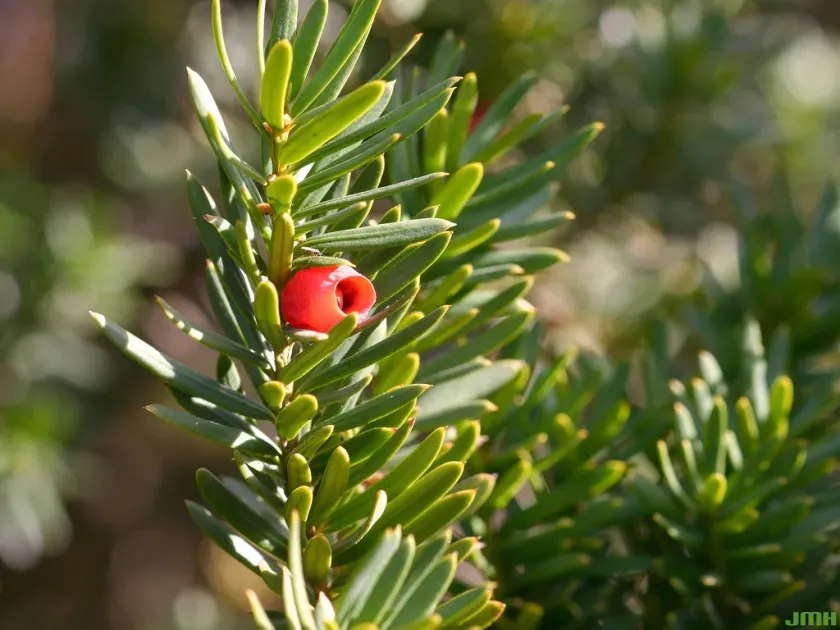
Description
Growing requirements
Taxus × media, commonly known as the hybrid yew, is an interspecific cross between Taxus baccata and Taxus cuspidata, belonging to the Taxaceae family. This hybrid is widely prized in horticulture for its versatile growth habit, ranging from spreading to upright forms, and its remarkable tolerance to various light conditions.
The plant thrives best in fertile, loamy soils that are well-drained but retain sufficient moisture. While it is adaptable to a wide range of soil pH levels, it prefers slightly alkaline to neutral conditions. Proper site selection is crucial, as the plant cannot tolerate waterlogged conditions, which lead to root rot.
Regarding climate, hybrid yews exhibit excellent hardiness, often surpassing their parent species in cold tolerance. They prefer sites shielded from harsh, dry winter winds, which can cause dehydration of the needles. Mulching around the base is recommended to maintain soil moisture and moderate root zone temperature.
Cultural practices focus heavily on maintenance pruning. Taxus × media is among the most responsive conifers to shearing, making it an essential plant for topiary, formal hedges, and architectural landscaping. Regular pruning not only shapes the plant but also encourages dense foliage development.
Economically and aesthetically, hybrid yews are primarily utilized for urban landscaping, privacy screening, and decorative garden structures. Due to their slow, controlled growth rate and extreme longevity, they provide a permanent, low-maintenance feature in sustainable landscape design.
Main diseases and pests
The most significant pathological threats include Phytophthora root rot and Botrytis blight. These conditions are typically precipitated by poor drainage or excessive humidity around the foliage. Management involves rigorous soil moisture control and the application of appropriate fungicides during humid spells.
Pest management focuses primarily on the yew scale (Parthenolecanium pomeranicum) and the yew gall midge. These pests can significantly reduce plant vigor and cause cosmetic damage. Integrated pest management, including horticultural oils or systemic insecticides, is recommended to keep populations below damaging thresholds.