
Alberta spruce
Picea albertiana
Description
Growing requirements
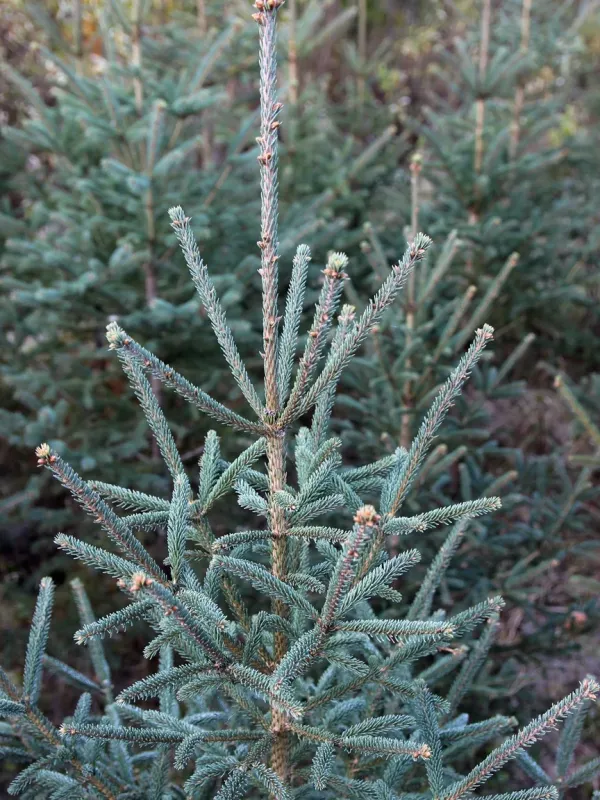
The Alberta spruce (Picea albertiana) is a distinct member of the Pinaceae family, native to the northern regions of North America. It is a slow-growing evergreen tree appreciated for its dense, symmetrical form and distinct glaucous needles, which give it a unique aesthetic appeal in garden settings.
This species thrives in well-drained, slightly acidic, and moist soils. It is critical to ensure that the planting site has sufficient aeration, as compacted or waterlogged soils can lead to root rot. Ideally, the soil should be rich in organic matter to support long-term growth.
In terms of climate, the Alberta spruce prefers cool, temperate conditions with moderate humidity. While it is highly hardy against frost, it can be sensitive to drying winds and intense spring sun, which can dehydrate the foliage if it is not properly acclimated or shaded during the first years.
Agricultural and gardening practices for this tree include regular mulching around the base to retain moisture and suppress weeds. Pruning is rarely necessary due to its naturally uniform growth habit, but light cleaning of dead branches in early spring keeps the plant healthy and aesthetically pleasing.
Its primary use is in landscape architecture, particularly for small gardens, containers, or foundation plantings. Because of its compact size, it is a versatile choice for rock gardens and formal garden displays where structure and evergreen foliage are desired throughout the year.
Main diseases and pests
The spruce spider mite is perhaps the most significant pest affecting Alberta spruce. These mites thrive in hot, dry conditions and feed on the needles, causing them to turn yellow or brown and eventually drop off, which can severely stunt the plant's growth over time.
Fungal diseases like Rhizosphaera needle cast pose a recurring threat, particularly in areas with high humidity. Symptoms include small black spots on the needles, leading to premature needle drop. Maintaining good air circulation is the best cultural defense against such infections.
Adelgids are another common pest, manifesting as cottony white masses on the needles. They weaken the tree by sucking sap and can cause deformity in the growth of new shoots. Early detection and treatment with horticultural oils or specific insecticides are recommended.
Root rot is often associated with poor drainage and excessive watering. To prevent this, ensure that the planting depth is correct and that the soil permits water to percolate away from the root zone effectively during heavy rains.
Monitoring the plant for signs of stress is vital. Healthy trees are better equipped to resist pests and diseases, so maintaining a balanced fertilization schedule and ensuring the plant receives adequate water during dry summer months is key to successful long-term cultivation.