
Trichilia tessmannii
Trichilia tessmannii
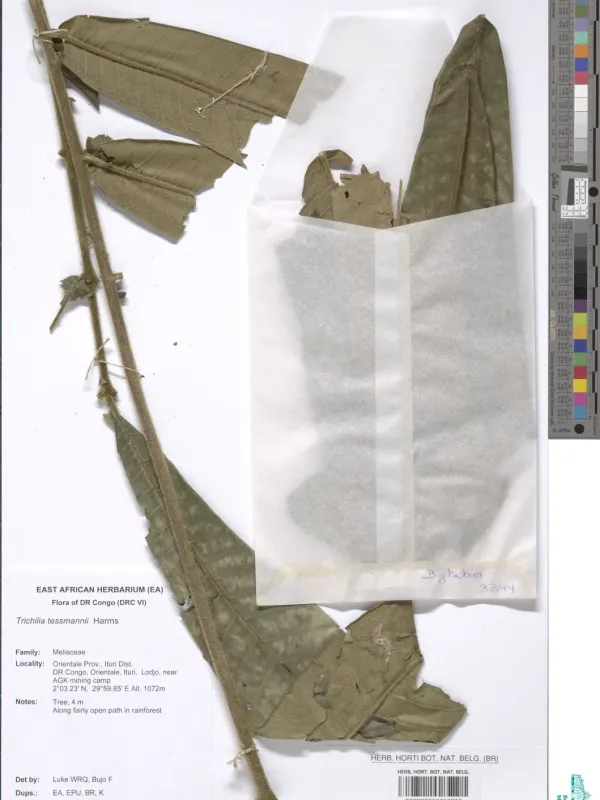
Description
Growing requirements
Trichilia tessmannii is a tropical tree species belonging to the Meliaceae (Mahogany) family. Native to the humid rainforests of West and Central Africa, this plant is well-adapted to high-humidity environments.
The tree thrives in fertile, well-drained soils rich in organic matter. Agronomists emphasize the importance of maintaining soil fertility and ensuring effective drainage to prevent waterlogging, which the root system cannot tolerate.
The climatic conditions required for the growth of this species include stable temperatures typically between +22°C and +30°C. It is strictly a tropical crop that requires consistent warmth throughout the year to achieve optimal biomass development.
In terms of light requirements, young specimens need partial shade, as they naturally grow in the understory of tropical forests. As the tree matures, it develops a robust canopy that can withstand greater light exposure.
Standard agrotechnical practices involve regular soil monitoring to ensure the pH remains within a range favorable for nutrient uptake, usually between 6.0 and 7.0.
Yield
The primary economic value of Trichilia tessmannii lies in its high-quality timber. The wood is utilized for furniture manufacturing, construction, and various specialized woodworking applications due to its durability and aesthetic appeal.
Yield capacity is largely determined by the long-term management of plantations. Since this species grows at a moderate rate, timber production requires a strategic approach and multi-year planning cycles.
Beyond timber, parts of the tree are studied for their potential phytochemical compounds. Research suggests potential uses in traditional pharmacology, although commercial utilization remains secondary to forestry products.
Productivity improvements can be achieved through silvicultural interventions such as selective thinning and proper spacing, which ensure that individual trees receive sufficient nutrients and light.
Consistent output depends on maintaining the health of the plantation and preventing resource depletion through sustainable harvesting techniques.
Main diseases and pests
The tree is susceptible to several fungal diseases that thrive in the humid tropical conditions of its natural range. These pathogens can cause stem decay and compromise the quality of the harvested wood.
Insect pests, particularly wood-boring beetles and other xylophagous insects, pose a significant risk to the plant's health. Infestations can lead to substantial timber losses if not detected and treated early.
Deforestation and habitat loss represent the most severe threats to the species' long-term survival. The reduction of wild populations limits the availability of germplasm for future breeding programs.
Stress caused by extreme weather events or improper management practices often lowers the plant's natural resistance to pests. Ensuring stable conditions is crucial for maintaining tree vitality.
Integrated pest management (IPM) is recommended for commercial plantations to minimize the reliance on chemical treatments and promote environmental stability.