
Trichilia spondioides
Trichilia spondioides
Description
Growing requirements
Trichilia spondioides is an evergreen tree species belonging to the Meliaceae family. It is native to the Neotropics, with its range extending from Mexico through Central America into the tropical regions of South America.
The species thrives in warm, humid tropical environments. It is versatile regarding soil preferences, though it performs best in well-drained, nutrient-rich soils. It can tolerate various topographical conditions, ranging from lowland forests to mountainous regions.
The tree requires significant sunlight for optimal growth but demonstrates some tolerance to shade during its early growth stages. Water requirements are moderate, and it shows adaptability to seasonal rainfall patterns common in its native range.
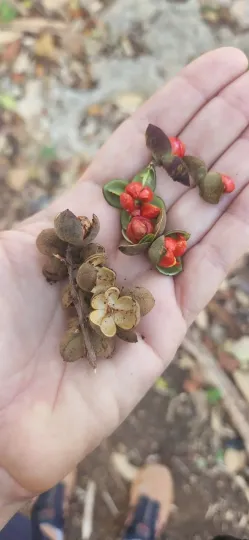
Botanically, it is recognized for its compound leaves and characteristic fruit capsules. When the fruit reaches maturity, it splits to reveal seeds encased in a colorful aril, which attracts local wildlife and aids in natural seed dispersal.
Economically, Trichilia spondioides is valued for its durable wood, utilized in carpentry, rural construction, and furniture making. Furthermore, it plays a vital role in agroforestry systems and reforestation initiatives due to its ecological resilience.
Main diseases and pests
The primary threats to this species include various wood-boring insects that target the trunk and branches, potentially compromising the structural integrity and quality of the timber. Regular health assessments are vital for plantation management.
In nursery settings, seedlings are prone to root rot caused by poor soil drainage and waterlogging. Ensuring adequate substrate aeration and controlling irrigation levels are crucial strategies for maintaining healthy stock.
Defoliating insects can occasionally cause widespread damage to the canopy, particularly during periods of environmental stress. Implementing integrated pest management (IPM) practices helps mitigate these impacts without relying solely on chemical treatments.
Habitat fragmentation remains a significant challenge for the long-term sustainability of natural populations. Conservation efforts must focus on maintaining connectivity between forest fragments to ensure healthy cross-pollination and genetic diversity.
Furthermore, fungal leaf diseases can spread rapidly in high-density plantations with poor airflow. Thinning operations and maintaining appropriate planting distances are essential cultural practices to minimize disease outbreaks and improve overall tree vigor.