
Upuna borneensis
Upuna borneensis
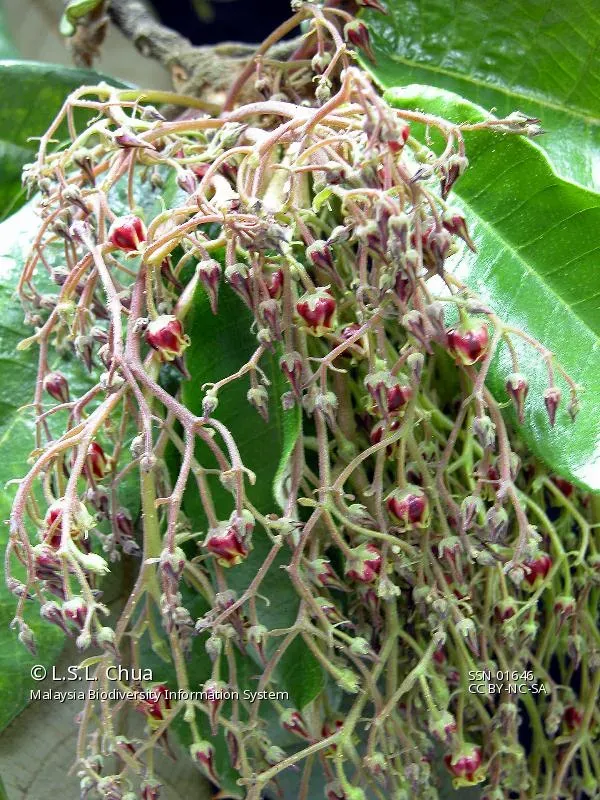
Description
Sowing dates
Upuna borneensis is a majestic tree belonging to the family Dipterocarpaceae. It is an endemic species restricted to the lowland rainforests of Borneo, where it plays a critical role in the complex ecosystem of the tropical canopy.
Botanically, this species is defined by its slow growth rate and high-quality timber, which has historically placed it at risk due to excessive logging. The life cycle begins with seeds that require a highly specific environment in the forest floor litter to germinate successfully.
The tree structure is characteristic of the Dipterocarp family, featuring a tall, straight trunk and dense wood tissue. In its natural environment, it competes for space within the primary forest, gradually emerging as part of the canopy layer.
Because the species is increasingly rare, it is now subject to strict conservation regulations. Agricultural development regarding this tree focuses on propagation in nurseries and genetic banking rather than large-scale plantation cultivation.
The biology of the tree is deeply intertwined with the rainforest microclimate. Unlike fast-growing commercial crops, Upuna borneensis requires stable conditions to reach maturity, which can take several decades.
Growing requirements
This species requires a strictly equatorial climate characterized by consistently high temperatures throughout the year. It does not possess adaptations to survive cold or significant seasonal temperature fluctuations.
High levels of annual precipitation are essential for the species' survival. The tree thrives in environments where humidity levels are constantly high, preventing physiological stress caused by water deficit in the foliage.
The soil requirements are specific to deep, nutrient-rich substrates found in undisturbed rainforests. The tree relies on a symbiotic relationship with mycorrhizal fungi in the soil, which helps in the efficient uptake of nutrients from decaying organic matter.
Sunlight requirements change throughout the tree's lifespan. While saplings require shade to develop, mature specimens adapt to reach the upper canopy, where they receive full exposure to sunlight to support their energy needs.
Proper drainage is necessary to prevent root rot, yet the tree cannot tolerate dry or sandy soils that fail to hold moisture. A balanced, clay-loam structure with high organic content is ideal for its development.
Main diseases and pests
The primary threat to Upuna borneensis is habitat loss caused by deforestation. Vast areas of Borneo's rainforests have been cleared for oil palm plantations, directly reducing the available territory for this sensitive species.
Fragmentation of the forest leads to the isolation of existing trees, which interferes with pollination and seed dispersal. When a population becomes too sparse, the chances of successful natural regeneration decrease significantly.
Fungal pathogens and soil-borne diseases pose a risk, especially in areas where the forest floor has been disturbed by human activity. The loss of the natural microclimate can leave young saplings vulnerable to opportunistic infections.
Uncontrolled forest fires, often sparked by land clearing for agriculture, destroy young saplings that are not yet equipped to survive heat. These fires also degrade the soil, making it inhospitable for future growth.
While invasive insect species are not the main driver of population decline, their activity can weaken trees already stressed by changes in the environment, ultimately leading to their premature mortality.
Harvesting
The utilization of Upuna borneensis is restricted due to its conservation status. Historically, its wood was harvested for high-end construction and furniture due to its density, durability, and natural resistance to decay.
Today, sustainable harvesting is virtually non-existent, as the primary goal is the restoration of wild populations. Any timber that does enter the market is usually strictly controlled by local forestry authorities.
Restoration efforts involve the collection of seeds from mature trees, followed by careful nursery rearing before the seedlings are transplanted back into protected forest reserves. This is a slow and costly process.
Research into the species continues to focus on how to propagate it more effectively. Sustainable management requires preventing any damage to the surrounding ecosystem, as the tree relies on forest integrity to mature.
Future harvest plans, if any, will likely involve selective harvesting of mature trees only after extensive replanting efforts have ensured the long-term survival of the species in its endemic range.