
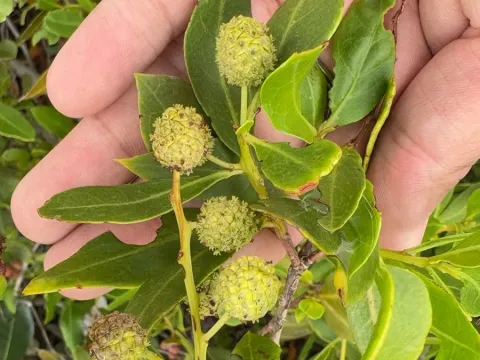
Conocarpus
Conocarpus
Conocarpus is a genus of flowering plants in the family Combretaceae. The most notable species, Conocarpus erectus, is widely recognized for its high tolerance to saline environments, making it a critical species in coastal restoration and landscaping projects across tropical regions.
What the section contains

Conocarpus
The plant originates from the tropical and subtropical areas of the Americas and Africa. It is a versatile evergreen shrub or tree that thrives in both sandy coastal soils and heavier, well-draining substrates where other species would struggle.
Climatically, Conocarpus is strictly a tropical plant. It requires high average temperatures throughout the year and has zero frost tolerance, which restricts its agricultural and ornamental cultivation to warm, ice-free zones.
The agricultural importance of this crop lies in its role as a windbreaker and a tool for soil erosion control. Its dense canopy and strong root system provide excellent protection against storm winds in coastal agricultural settings.
Cultivation practices involve regular pruning to manage its vigorous growth habits. Once established, the plant is remarkably drought-tolerant, although consistent irrigation during the early growth phase is essential for optimal development.
Conocarpus is generally known for its high resistance to common pests and diseases, which makes it a low-maintenance agricultural crop in its native habitat.
The primary health risk for this plant is related to water management, specifically root rot caused by poor soil drainage and waterlogging.
In densely planted environments, sap-sucking insects like scale insects or aphids may appear on the foliage if the air circulation is poor and humidity levels are excessively high.
Disease management focuses primarily on prevention, which includes selecting well-draining soil and ensuring adequate space between plants to prevent the accumulation of excess humidity.
When pests are detected, prompt intervention using systemic or surface insecticides is usually sufficient to restore the health of the plant without long-term damage.