
Guiera
Guiera
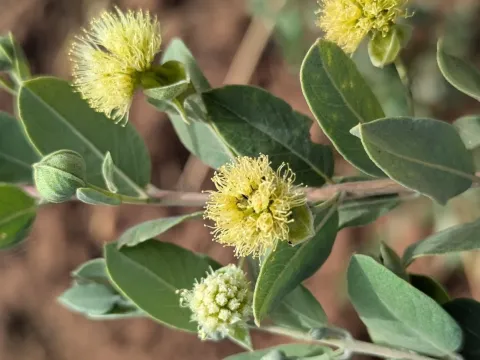
Guiera (Latin Guiera senegalensis) is a prominent shrub belonging to the Combretaceae family, native to the Sahel region of West Africa. This species is highly valued for its exceptional ability to survive and thrive in semi-arid and harsh desert-like environments.
What the section contains

Guiera
The plant demonstrates remarkable drought tolerance, growing in poor, sandy, and stony soils where other species fail. Its deep taproot system allows it to reach water reserves far beneath the surface, ensuring survival during intense dry seasons.
Guiera requires full sun exposure for healthy growth and development. High thermal indices are essential for the production of the alkaloids and polyphenols found in its foliage, which are highly prized for their chemical properties.
Agricultural management is relatively low-input. The plant regenerates effectively from root suckers, making it an excellent candidate for reforestation and erosion control in arid areas. Minimal tillage is recommended to preserve the soil microbiome.
Beyond its ecological role, Guiera is an important economic resource. Its leaves are traditionally used in ethnomedicine to treat various respiratory and gastrointestinal ailments, while its wood is a sustainable source of fuel and artisanal material.
Fungal pathogens represent the primary threat to Guiera when the plant is introduced to environments with high humidity. Ensuring proper airflow and planting on well-drained slopes are essential preventive measures.
Certain coleoptera and lepidoptera larvae may feed on the leaves, although the high tannin content provides a significant deterrent. Control is typically not required unless infestations exceed natural tolerance levels.
Root rot is a significant risk in areas with stagnant water or poor drainage. Proper site selection is the most effective way to avoid this issue, as the plant is not adapted to waterlogged conditions.
Invasive weed species can compete with young seedlings for nutrients during the early stages of establishment. Regular weeding in the first year of growth is crucial for the successful survival of the plantation.
Over-harvesting of the leaves and woody stems by local populations can lead to a decline in plant density. Sustainable harvesting practices and the rotation of collection sites are necessary to maintain the long-term viability of the population.