
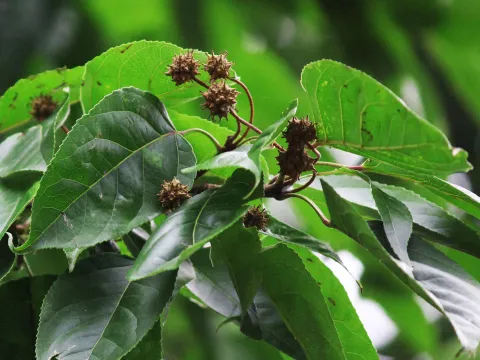
Altingia
Altingia
Altingia is a genus of evergreen trees belonging to the Altingiaceae family. Native to the tropical and subtropical regions of Southeast Asia, these trees are highly valued for both their wood quality and the aromatic resins produced by their bark.
What the section contains

Altingia
When it comes to soil requirements, Altingia thrives in deep, well-draining soils with high organic matter content. While the plants can adapt to various soil textures, they strictly require a location free from waterlogging to prevent root suffocation and subsequent decay.
Climate conditions are paramount for this culture. It requires high annual rainfall and a warm, frost-free environment to reach its full growth potential. Protecting young saplings from direct, harsh winds is also essential for maintaining leaf integrity and overall vigor.
Agricultural management involves a consistent irrigation schedule during the dry season and periodic fertilization to support rapid growth rates. Careful soil testing is recommended to ensure that micronutrient levels remain optimal for the tree's physiological needs.
The primary commercial use of Altingia is the extraction of styrax, a fragrant resin used in the production of incense, perfumes, and medicinal balms. Additionally, the timber is prized for its high density and unique aesthetic pattern, making it suitable for high-end woodwork.
The primary diseases affecting Altingia often involve fungal infections that target the bark and foliage. High levels of humidity combined with poor airflow can create a breeding ground for various blight and rust pathogens that weaken the tree's structural integrity.
Pest threats include wood-boring insects, which can severely compromise the tree's health by drilling into the vascular tissue. These pests are particularly dangerous to established plantations, as they disrupt the flow of sap and resin production.
Integrated Pest Management (IPM) is the most effective approach for maintaining healthy Altingia groves. This involves constant surveillance, the use of pheromone traps, and the strategic application of biological controls to keep pest populations below the economic injury level.
Sanitation practices are critical in controlling disease outbreaks. Removing and destroying infected branches or fallen debris prevents the spread of spores throughout the plantation, ensuring the long-term health of the entire crop.
Farmers should implement a preventive spraying program using specialized fungicides during periods of high precipitation. Proper spacing between trees is also essential to ensure that sunlight reaches the inner canopy, naturally inhibiting fungal growth.