
Anisoptera grossivenia
Anisoptera grossivenia
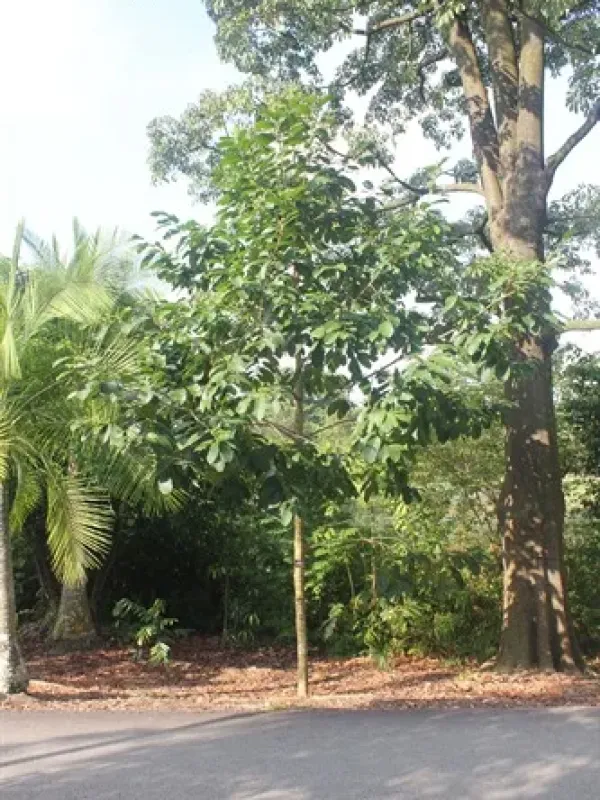
Description
Growing requirements
Anisoptera grossivenia is a prominent tropical evergreen tree belonging to the family Dipterocarpaceae. Native to the lowland rain forests of Borneo and surrounding regions in Southeast Asia, this species represents a crucial component of tropical forest biodiversity.
The culture thrives in environments with high annual precipitation and consistently warm temperatures. It requires deep, fertile, and well-drained soils, typically found in alluvial plains, to reach its full development potential and canopy height.
Botanically, this species is characterized by its broad, leathery leaves and efficient nutrient uptake systems suited for competitive forest environments. It undergoes a relatively slow juvenile growth phase, during which it relies on the protection of the forest canopy.
Climatic requirements are strict: the tree demands a stable tropical climate without distinct cool seasons. Temperature fluctuations and drought stress are the primary limiting factors for its range expansion beyond the equatorial belt.
In silvicultural practice, careful site selection is paramount. The species requires soil with good aeration to avoid root-level pathologies, and it benefits from minimal disturbance to the soil profile during the initial planting stages.
Yield
The primary economic use of Anisoptera grossivenia is timber production. The wood is categorized as a light hardwood, highly valued for its consistency, ease of machining, and aesthetic appearance in interior design applications.
Commercial yields are calculated based on the long-term volume growth of the main stem. While the growth cycle is lengthy, the quality of timber produced satisfies high-demand markets for furniture, plywood, and high-quality construction materials.
Forestry management focuses on optimizing tree density to maximize wood volume per hectare. Sustainable harvesting techniques, including selective logging and thinning, are employed to ensure the longevity of the timber stand.
Advances in forestry technology, such as improved soil analysis and nutrient monitoring, have allowed for more predictable yield outcomes. Proper spacing and thinning allow individual trees to reach optimal harvesting diameter more efficiently.
The harvested wood is processed into various forms, ranging from raw lumber to processed veneers, making it an essential resource for sustainable forestry initiatives in Southeast Asia.
Main diseases and pests
Pathogenic fungi represent the most significant threat, particularly in nurseries where humidity levels are excessively high. Root rot pathogens can cause devastating losses if proper drainage and soil ventilation are not maintained.
Insect pests, including various stem borers and bark beetles, pose a chronic risk to the tree's health. These pests can weaken the structure of the trunk and make the trees more susceptible to further environmental stress.
Competition from aggressive invasive lianas and rapid-growing weeds can choke juvenile trees. Maintaining a clean cultivation area is essential for ensuring that the trees receive sufficient nutrients and light throughout their development.
Environmental changes, including alterations in regional hydrological patterns, have made some stands more vulnerable to opportunistic diseases. Monitoring tree health via remote sensing has become a standard practice in large-scale operations.
Integrated Pest Management (IPM) strategies are utilized to manage threat levels. These strategies emphasize biological controls to protect the delicate balance of the forest ecosystem while minimizing the use of synthetic chemicals.