
Anisoptera laevis
Anisoptera laevis
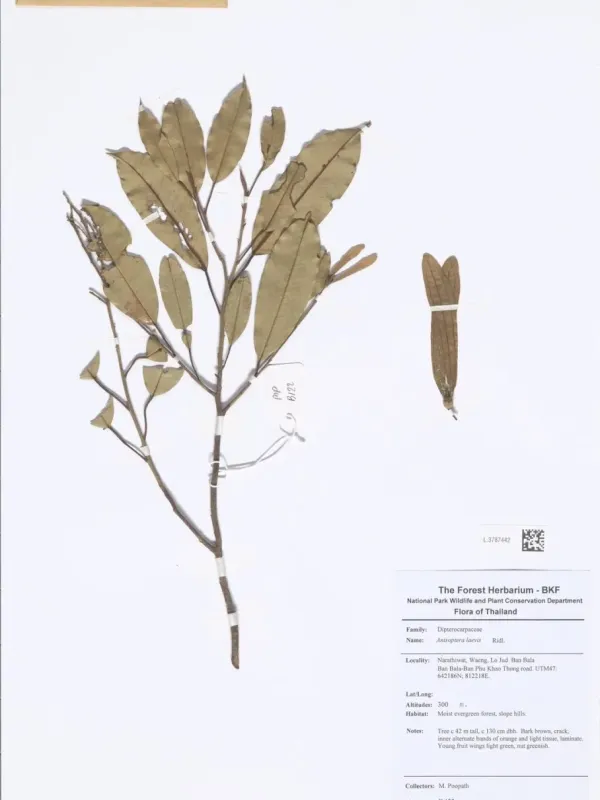
Description
Growing requirements
Anisoptera laevis is a prominent tropical tree species belonging to the Dipterocarpaceae family. It is recognized as a majestic component of the tropical rainforests in Southeast Asia, contributing significantly to forest biomass.
The natural distribution of this species spans across the Malay Peninsula, Sumatra, and Borneo. It thrives in environments with deep, fertile, and well-drained soils, adapting to various altitudes ranging from coastal lowlands to mountainous terrains.
The species has specific climate requirements, demanding consistently high annual temperatures and substantial, evenly distributed rainfall. It does not tolerate prolonged drought periods, which makes it highly sensitive to changes in regional rainfall patterns.
Botanically, Anisoptera laevis displays a robust stature with a relatively smooth bark when mature, setting it apart from other species in the same family. Its leaf structure and wide canopy facilitate high photosynthetic efficiency, enabling the tree to dominate the canopy layer.
Economically, the tree is primarily managed for its high-density timber. The wood is widely utilized in heavy construction, furniture manufacturing, and flooring, thanks to its durability, resistance to rot, and attractive grain structure.
Main diseases and pests
The primary threat to Anisoptera laevis populations is large-scale deforestation and land conversion. Loss of natural habitat leads to fragmentation, which severely restricts the species' ability to regenerate naturally in the wild.
Fungal pathogens represent a significant risk, particularly those affecting the root system. These infections often proliferate in disturbed soils or in areas where human activity has negatively altered the natural hydrological cycle.
Wood-boring insects act as common pests, causing physical degradation of the timber. These infestations can escalate during periods of environmental stress, significantly impacting the commercial output and the overall health of individual trees.
Management strategies focus on strict adherence to sustainable logging practices to preserve the ecological integrity of the stands. Protecting the forest floor and minimizing soil compaction are essential to preventing pest outbreaks.
- Integrated forest health monitoring systems.
- Control of invasive flora during early growth stages.
- Strict regulation of logging quotas to ensure long-term sustainability.