
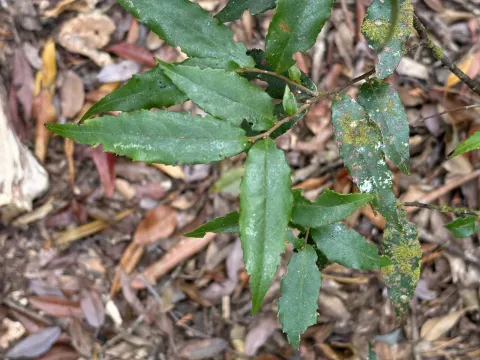
Symplocos
Symplocos Jacq.
Symplocos is a genus of shrubs and trees belonging to the family Symplocaceae. It naturally occurs in tropical and subtropical regions across Asia, the Americas, and Australia, typically thriving in forest understories where humidity levels remain consistently high throughout the year.
What the section contains
Symplocos
The cultivation of this plant requires specific soil conditions, ideally acidic and well-drained. The presence of organic matter is crucial for healthy development, as the root system benefits significantly from a fertile, friable substrate. Proper drainage is essential to avoid root rot.
Regarding climate, Symplocos species are sensitive to extreme temperatures. They require a frost-free environment and high ambient moisture. In regions with harsh winters, greenhouse cultivation is mandatory to maintain the plant's structural integrity and foliage health.
Light management is a key agronomical factor. While some varieties can tolerate brighter conditions, most species perform best in partial shade. Providing diffused light prevents leaf scorch and promotes balanced vegetative growth without stressing the specimen.
Maintenance includes consistent watering and acid-based fertilization. Since the plant is often acid-loving, monitoring the pH levels of the irrigation water and the soil is vital to prevent nutrient deficiencies, specifically iron chlorosis, which can weaken the plant.
The economic utilization of Symplocos historically centers on its capacity as a source of natural dyes. Certain species are prized for their ability to provide mordants or pigments that enhance the color fastness of textile fibers, especially silk and cotton.
Harvesting usually involves selective pruning of branches and foliage. This method ensures that the plant remains vigorous and continues to produce new growth. Careful timing is required to avoid damaging the plant during its active development phases.
Post-harvest processing focuses on drying the plant matter under controlled conditions. Removing moisture efficiently is essential to protect the chemical integrity of the compounds within the leaves, which are the primary target for further industrial extraction.
Storage of the processed materials must occur in cool, dry environments. Protecting the harvest from moisture and direct UV radiation prevents the degradation of active pigments and tannins, ensuring a high-quality product for the consumer.
Sustainable harvesting practices involve rotational pruning. By managing different areas of a cultivation site, producers can ensure a steady supply of biomass without compromising the long-term health and productivity of the Symplocos stands.