
Laurel sugarbush
Protea laurifolia
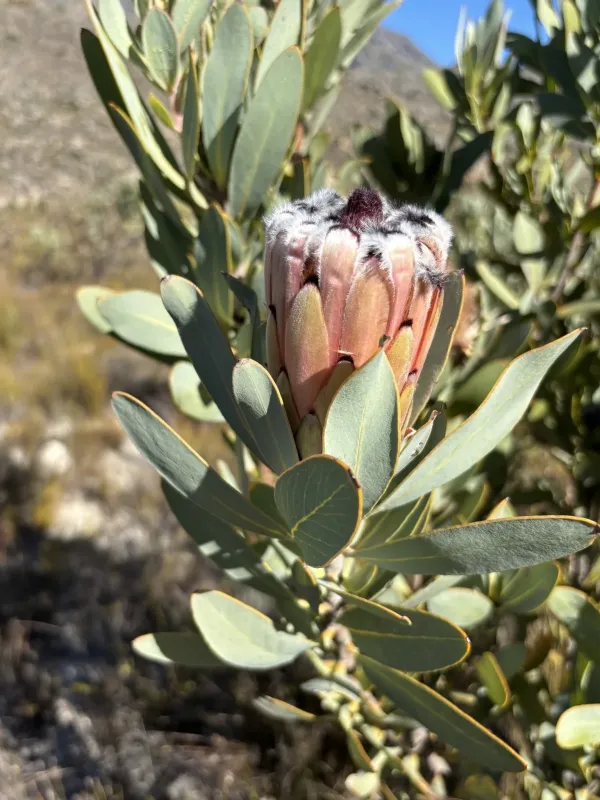
Description
Sowing dates
Protea laurifolia belongs to the Proteaceae family and is an evergreen shrub typically propagated by seeds. Seeds should be sown in a well-drained substrate consisting of sand, perlite, and peat to ensure maximum aeration for the developing root system.
The optimal time for sowing is late summer or early autumn, mimicking the natural germination cycles of its native South African range. To increase germination rates, seeds are often subjected to pre-treatment mimicking fire or heat exposure, which is a natural trigger for many Protea species.
When sowing, it is crucial to plant seeds at a depth not exceeding twice their diameter to ensure the proper emergence of the sprout. Containers should be kept in conditions of moderate humidity, avoiding waterlogging, which is fatal for young root structures.
Once true leaves appear, seedlings are transplanted into individual containers with a similar soil composition. Root formation in Protea is slow and delicate, so transplanting must be done with extreme care to avoid damaging the sensitive root hairs.
Flowering from seed can take 3-4 years, requiring patience from growers. Utilizing high-quality, viable seed stock is the foundation for producing strong, healthy plants suitable for commercial cut flower production.
Growing requirements
Native to South Africa, Protea laurifolia thrives in a Mediterranean climate. The plant requires bright, full sunlight; inadequate light leads to spindly growth and a significant reduction in flower production.
Success depends on acidic, low-phosphorus soil. The roots are extremely sensitive to high nutrient levels, particularly phosphorus, which can cause severe toxicity. The substrate must be highly permeable to prevent water stagnation, which quickly leads to root pathogens.
The temperature regime should be moderate. While the plant can tolerate light frosts down to -3...-5 degrees Celsius, prolonged exposure to cold is critical. Greenhouse environments must maintain constant air circulation to prevent fungal outbreaks.
Irrigation must be precise; regular but cautious watering is essential to prevent root rot. During summer, moderate moisture is required, while winter watering should be reduced to a minimum to keep the soil only slightly damp.
The crop reacts negatively to standard high-phosphorus fertilizers. It is recommended to use specialized low-salt fertilizers designed for Proteaceae, applied in limited doses during active growth periods only.
Main diseases and pests
The primary threat to Protea is the fungus Phytophthora, which attacks root systems in conditions of high humidity and poor ventilation. Infected plants are rarely salvageable, making strict preventative measures the only effective management strategy.
Common insect pests include scale insects and mealybugs, which sap nutrients from young leaves and stems. Their presence is often indicated by a sticky residue, which subsequently attracts sooty mold and compromises the plant's aesthetic value.
Spider mites can proliferate rapidly in hot, dry air, causing leaf discoloration and premature abscission. Regular monitoring and the application of mild acaricides are recommended to keep populations below economic damage thresholds.
Water excess combined with poor soil aeration leads to inevitable stem and root rot. Early symptoms include chlorotic leaf tips and sudden wilting of terminal shoots, indicating irreversible damage to the plant's vascular system.
To prevent the spread of diseases, strict sanitary protocols must be enforced: disinfecting all pruning tools, using only sterile growing media, and immediately isolating or removing any suspicious plants from the production area.
Harvesting
Harvesting of Protea laurifolia flowers is performed when the bracts are fully open but the central florets have not yet shed their pollen. Stems harvested at this stage offer excellent vase life, making them a highly valued commodity in the floral industry.
Cutting is best performed in the early morning when the plant is turgid. Using sharp, sanitized secateurs, stems are cut at the level of the second or third node from the base, which encourages more vigorous branching for the following season.
Immediately after cutting, stems should be placed in clean water supplemented with specialized floral preservatives. Proteas are sensitive and should not be mixed with other floral species in vases, as they release substances that may accelerate the senescence of companion flowers.
For transport, flower heads should be wrapped in breathable paper to protect the delicate bracts from mechanical damage. Storage prior to shipment should occur in a cool environment, approximately +5...+8 degrees Celsius, to slow down aging processes.
Post-harvest, plants require sanitary pruning to remove weak or deformed stems. This directs the plant’s energy toward forming new flower buds, ensuring consistent productivity over many years of plantation operation.