
Angola sugarbush
Protea angolensis
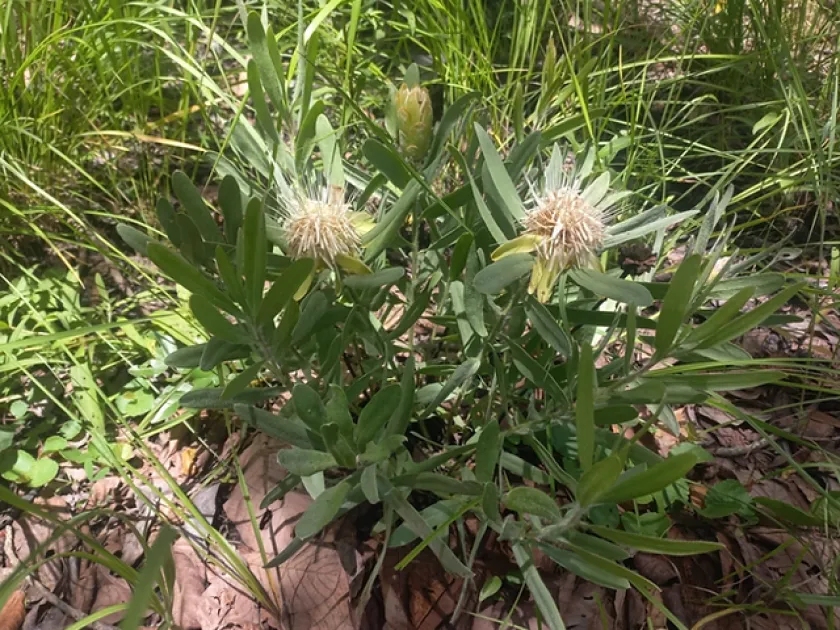
Description
Sowing dates
Propagation of Protea angolensis is primarily achieved through seeds or cuttings, requiring specialized techniques to overcome natural dormancy mechanisms.
Seeds are sown in a well-draining, acidic substrate composed of sand and perlite, ensuring that the mixture does not retain excess water, which could lead to decay.
To simulate natural habitat conditions, seeds are often treated with smoke extract, which is known to trigger germination in many species of the Proteaceae family.
The optimal sowing time coincides with the start of the growing season, providing seedlings with increasing light hours to support steady development.
Young plants require careful attention to air circulation and light intensity to prevent etiolation and ensure the development of a robust root system during the initial growth stages.
Growing requirements
Protea angolensis is a resilient shrub belonging to the Proteaceae family, native to the diverse landscapes of tropical and southern Africa, often found in savannah habitats.
This crop thrives under full sun exposure and requires high light intensity to produce its distinctive, visually striking inflorescences characteristic of the genus.
The soil profile must be low in phosphorus, as the plant has evolved in nutrient-poor soils and is highly sensitive to the toxic effects of excessive phosphate fertilizers.
Temperature management is critical, with an ideal range between 15°C and 25°C; the plant tolerates dry conditions well but is vulnerable to sustained frost or extreme cold.
Maintaining a slightly acidic soil pH (5.0–6.0) is essential for proper nutrient uptake and preventing common deficiency-related disorders in greenhouse settings.
Yield
The commercial cultivation of Protea angolensis is focused on the high-value cut flower market, where its exotic aesthetic is highly sought after by premium florists.
Yield capacity depends on the maturity of the shrubs and the specific light conditions managed within the protected growing environment throughout the year.
Strategic pruning post-flowering is a key factor in yield optimization, as it encourages the growth of new stems that will bear flowers in the subsequent harvest cycle.
Modern farms utilize precision fertigation systems to provide balanced nutrition that avoids the accumulation of salts while supplying necessary micronutrients.
When managed effectively, this species provides a reliable output of long-lasting inflorescences that maintain excellent quality during transportation and display.
Main diseases and pests
The most significant threat to Protea crops is Phytophthora root rot, a soil-borne pathogen that thrives in poorly drained conditions and is often fatal to the plant.
Disease management relies heavily on preventative measures, including the use of sterilized media, clean water sources, and strict hygiene protocols within the production site.
Pests such as spider mites and mealybugs can affect the plant's health, particularly in dry and stagnant air environments where these insects propagate rapidly.
Biological control agents are preferred over chemical pesticides, as Proteaceae species are known for their sensitivity to many common agricultural chemical compounds.
Constant monitoring of foliage and stem condition is necessary to detect early signs of infestation or nutrient imbalances before they impact the quality of the flowers.
Harvesting
Harvesting is executed when the floral bracts have fully expanded, indicating that the flower has reached peak maturity but has not yet begun to senesce.
Using sanitized tools, stems are cut at an angle to allow for maximum water uptake while leaving enough vegetative material on the shrub to support future growth.
Immediate post-harvest hydration and cold chain management are essential to preserve the structural integrity and longevity of the cut inflorescences.
Product grading is based on stem length, inflorescence size, and color vibrancy, ensuring that only the highest quality stems reach the premium export markets.
Proper packaging techniques prevent mechanical damage to the delicate bracts, ensuring the product arrives in pristine condition for the end customer.