
Coast banksia
Banksia integrifolia L. f.
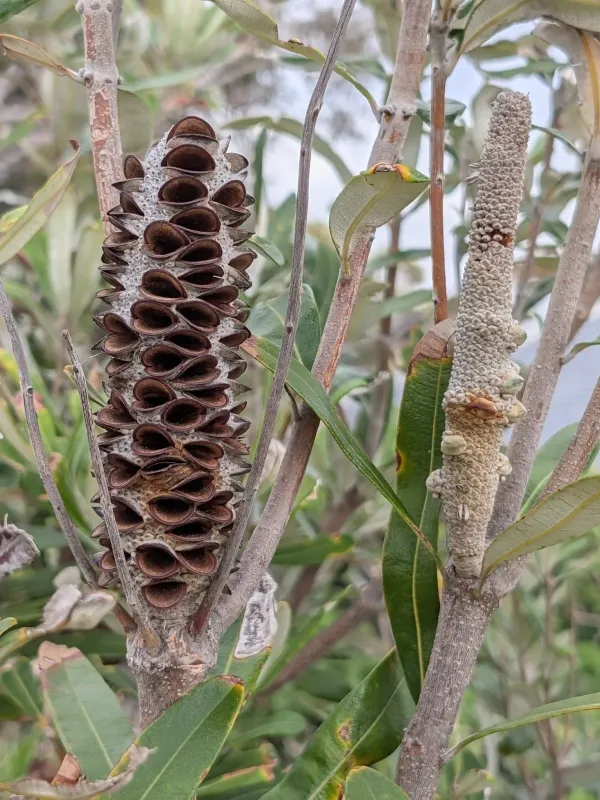
Description
Growing requirements
Coast banksia (Banksia integrifolia) is a robust evergreen tree or shrub belonging to the Proteaceae family. It is widely recognized for its adaptability to diverse environmental conditions, particularly in coastal regions where it thrives against salty maritime winds.
The native distribution of this plant spans the eastern coast of Australia. Its natural habitat ranges from dunes to rocky cliffs, indicating a high tolerance for poor, sandy soil structures that offer excellent natural drainage.
For successful cultivation, well-draining soil is the most critical factor. The plant is highly sensitive to phosphorus; therefore, it requires specialized low-phosphorus fertilizers to ensure proper nutrient uptake and to avoid root system toxicity.
Exposure to full sunlight is essential for the healthy growth and blooming of Banksia integrifolia. While it is adaptable to various temperature ranges, it prefers temperate to subtropical climates and needs protection from heavy frost.
Watering requirements are moderate. Once the plant is established, it demonstrates high drought tolerance, though young specimens require consistent moisture to develop a strong root system before they can handle drier conditions.
Main diseases and pests
The most significant threat to the survival of the Coast banksia is Phytophthora root rot, caused by the soil-borne pathogen Phytophthora cinnamomi. This disease thrives in waterlogged conditions and can be fatal to the tree.
Pests such as stem-boring beetles and certain caterpillar species can cause damage by feeding on foliage and floral structures. These infestations are often secondary, occurring in trees that are already stressed by poor environmental conditions.
Preventative measures should focus on maintaining perfect drainage and avoiding soil compaction. Providing adequate spacing between plantings ensures better air circulation, which helps reduce the occurrence of fungal infections like powdery mildew.
Cultural hygiene, including the prompt removal of dead or decaying organic matter from beneath the canopy, is recommended to minimize the habitat for potential insect pests and fungal pathogens.
In cases of significant pest outbreaks, organic-based horticultural oils or soft soap sprays can be effective if applied early. It is important to monitor the plant's health periodically to ensure early detection of any physiological stress.