
Banksia coccinea
Banksia coccinea R. Br.
Description
Sowing dates
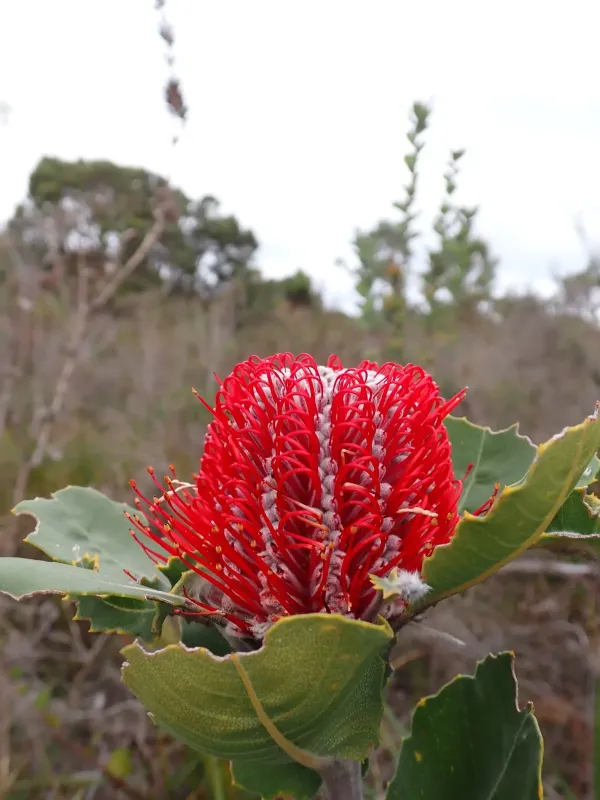
Banksia coccinea, known as the scarlet banksia, is a member of the Proteaceae family native to Western Australia. Commercial propagation is typically achieved through seed germination, requiring specific pre-treatment techniques.
Seeds are sown in a well-draining, acidic growing medium. Optimal results are achieved when sowing in late winter, maintaining a consistent soil temperature of approximately 20 degrees Celsius.
Germination usually occurs within 3 to 6 weeks. It is crucial to avoid waterlogged conditions, as the seedlings are highly susceptible to root decay during the early stages of development.
Once true leaves develop, seedlings are transplanted into individual pots. Low-phosphorus fertilizer is essential, as excessive phosphorus can be toxic to plants within the Proteaceae family.
High light exposure and excellent airflow are vital for the healthy development of young banksia plants in a nursery setting.
Growing requirements
This species thrives in sunny, open locations with minimal shade. The soil must be acidic, sandy, and possess exceptional drainage capabilities to prevent root system issues.
Banksia plants prefer moderate climates and are sensitive to extreme frost or excessive humidity. A consistent environment is key to maximizing plant health and vigor.
Irrigation management is the most challenging aspect of its cultivation. The soil should be allowed to dry out significantly between watering sessions to ensure oxygen reaches the roots.
Adequate ventilation is necessary in greenhouse environments to prevent the buildup of humidity. Stagnant air leads to the rapid development of fungal pathogens.
Specialized potting mixes for proteas are recommended, as standard commercial composts are often too rich in organic matter and nutrients for this native Australian plant.
Yield
Yield in floriculture is measured by the number of high-quality inflorescences produced per plant. A healthy, mature scarlet banksia can produce a substantial crop of stems annually.
Systematic pruning is necessary to encourage lateral branching, which increases the potential surface area for flower buds. This technique is standard in professional banksia plantations.
Harvesting should be timed when the individual florets within the flower spike are mostly open. This stage offers the best balance of aesthetic appeal and post-harvest longevity.
Yield optimization also depends on the light quality provided during the growing season. Plants grown under optimal spectral conditions show higher flower density and better coloration.
Management practices after harvest focus on balancing vegetative growth with the plant's energy reserves to ensure consistent production in subsequent years.
Main diseases and pests
Root rot caused by Phytophthora cinnamomi is the most severe threat to Banksia coccinea. It is virtually incurable once established, making prevention via drainage and hygiene paramount.
Insect pests like mealybugs and scale insects can infest stems and foliage. Integrated pest management using low-toxicity biological controls is preferred to protect the delicate root system.
Botrytis, or grey mold, may occur if humidity levels are not properly controlled. Pruning dead material and increasing airflow are the most effective preventative measures.
Nutrient imbalances, particularly iron deficiency, appear as leaf chlorosis. Correcting soil pH is the most effective way to restore nutrient availability and leaf health.
Chemical intervention should be cautious. Always test fungicides and insecticides on a small group of plants to ensure they do not cause phytotoxic damage.
Harvesting
Harvesting is performed using sanitized, sharp tools to avoid damaging the woody stems. Stems should be cut at an angle to maximize water uptake post-harvest.
Immediate placement in clean water or a hydration solution is necessary to prevent air embolisms, which significantly shorten the vase life of the flowers.
Once harvested, stems are graded based on height, head size, and color uniformity. Professional handling ensures that the delicate floral structures are not crushed during the process.
Packing for transport involves securing the stems to prevent movement. Ensuring proper ventilation in shipping containers is essential to prevent moisture buildup and decay.
For storage, maintain temperatures between 2 and 4 degrees Celsius with moderate humidity to slow respiration and extend the freshness of the cut flowers.