
Saw Banksia
Banksia serrata
Description
Growing requirements
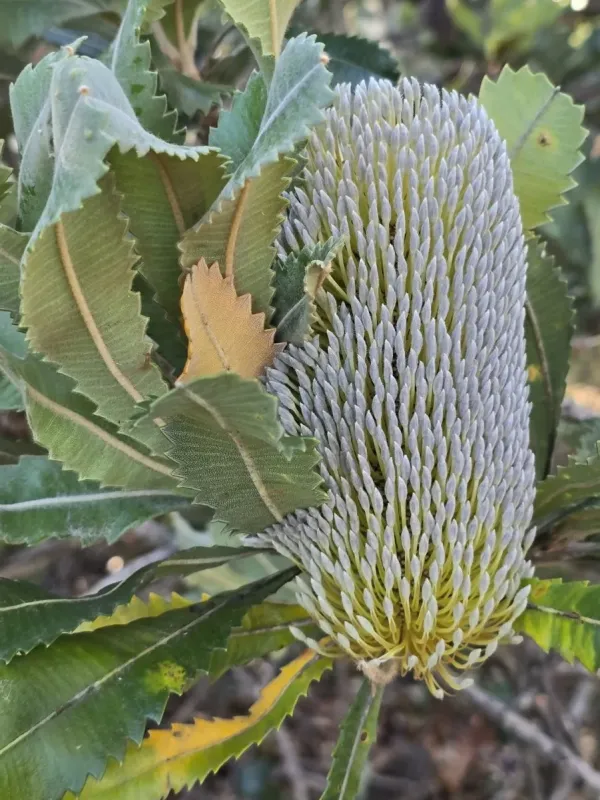
Banksia serrata, commonly known as Saw Banksia, is a member of the Proteaceae family native to the eastern coast of Australia. This evergreen tree is highly valued for its striking, large, cylindrical flower spikes and its rugged, corky bark that provides high fire resistance.
The cultivation of this species requires well-drained, sandy soils that are inherently low in nutrients. It is an excellent choice for xeriscaping in coastal regions due to its remarkable tolerance to salt spray and periodic drought conditions.
Environmental requirements include a temperate climate with full exposure to sunlight. The root system is specialized, forming proteoid roots that efficiently extract phosphorus from nutrient-poor environments, making conventional chemical fertilization unsuitable and potentially harmful.
Agricultural management should prioritize minimal soil disturbance, as the roots are sensitive to compaction and mechanical damage. Establishing the plant in its permanent location early is essential, as the species does not handle transplanting well once mature.
Economic applications for Banksia serrata are focused on the horticultural industry, where it is utilized for landscape design and the production of unique cut flowers. Its ability to retain shape and color makes the flower spikes a staple in high-end florist arrangements.
Main diseases and pests
The primary threat to the health of Banksia serrata is the root-rotting pathogen Phytophthora cinnamomi. This soil-borne fungus thrives in waterlogged conditions and can quickly decimate populations in poorly drained agricultural or garden soils.
Insects such as mealybugs and scale insects frequently infest the foliage and young terminal shoots. These pests weaken the plant by extracting sap and producing honeydew, which further encourages the growth of sooty mold, reducing the aesthetic value of the plant.
Wood-boring larvae pose a structural risk to the trunks of older specimens. Monitoring for sawdust or small entry holes in the bark is necessary to implement control measures before significant internal damage occurs to the woody tissue.
Phosphate toxicity is a significant physiological threat to the species, often caused by the accidental application of high-phosphorus fertilizers meant for other crops. This results in severe leaf scorch and eventual decline, as the plant cannot regulate high nutrient uptake.
Integrated pest management strategies are recommended, focusing on the preservation of natural predators and the strict maintenance of sanitary conditions in the planting zone. Avoiding overwatering and ensuring rapid surface drainage are the best defenses against root pathogens.