
Banksia pulchella
Banksia pulchella
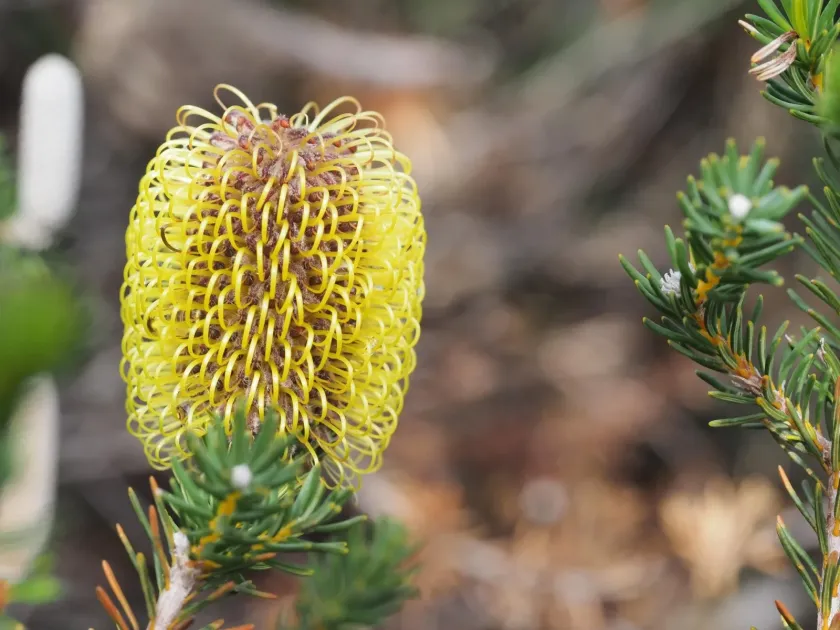
Description
Growing requirements
Banksia pulchella is an evergreen shrub belonging to the Proteaceae family. Native to the coastal sandplains of Western Australia, it is a highly specialized plant adapted to nutrient-poor, well-draining sandy habitats.
The primary soil requirement for this species is a very low-phosphorus substrate with excellent drainage. Any waterlogged condition will inevitably lead to root rot, which is the most common cause of plant failure in non-native environments.
Regarding climate, this plant thrives in warm, sunny positions. It requires plenty of light to initiate flowering and maintain its compact, dense growth habit. It is not frost-tolerant and requires greenhouse or conservatory protection in cooler regions.
Botany-wise, the species is distinguished by its unique proteoid roots that cluster near the surface to absorb nutrients effectively. Because of this, it is crucial to avoid disturbing the soil surface or the root system during maintenance.
Agrotechnical care focuses on minimal intervention. Fertilizer use must be strictly limited to slow-release types specifically formulated for native Australian proteaceous plants, as standard fertilizers are often fatal to the species.
Main diseases and pests
Phytophthora cinnamomi is the most significant biological threat to Banksia pulchella. This soil-borne oomycete destroys the root system, causing the plant to wilt and die rapidly once symptoms become visible.
Common indoor pests including spider mites and mealybugs can infest the foliage, particularly when air circulation is poor. Frequent monitoring and gentle cleaning of the leaves are essential to prevent outbreaks.
Chlorosis is a frequent physiological issue caused by alkaline soil conditions. If the pH is too high, the plant cannot uptake essential trace minerals, leading to yellowing of the leaves and eventual weakening of the entire shrub.
Fungal leaf spot diseases may occur in environments with high humidity and poor ventilation. Pruning should be performed selectively to improve airflow and reduce the chances of moisture accumulation on the foliage.
Root damage resulting from repotting is often a terminal event for this species. To manage risks, always keep the root ball intact and use the method of minimal disturbance when transferring the plant to a larger container.