
Banksia plumosa
Banksia plumosa
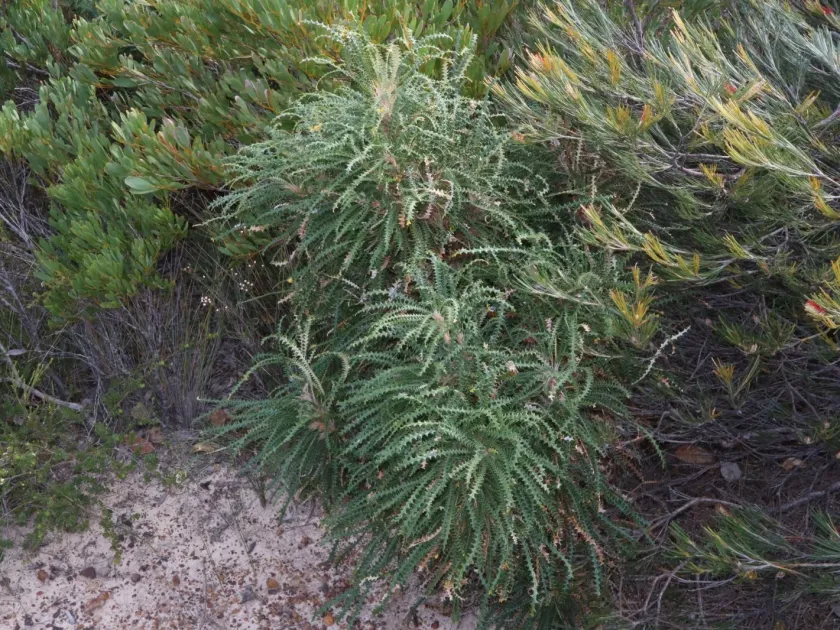
Description
Growing requirements
Banksia plumosa is a striking evergreen shrub belonging to the Proteaceae family, native to the southwestern regions of Western Australia. This plant is highly prized for its unique, feathery inflorescences and structural foliage, making it a distinctive element in xeriscaping and specialty horticulture.
The fundamental requirement for successful cultivation is exceptionally well-draining soil. As a member of the Proteaceae family, the plant has evolved in nutrient-poor, sandy soils. Any accumulation of water around the roots rapidly induces root rot, which is the primary cause of plant failure in non-native environments.
Regarding climate, the plant thrives in Mediterranean-type environments. It requires significant solar exposure and protection from freezing temperatures. In regions with cooler climates, cultivation is usually restricted to greenhouse environments where heat and light levels can be strictly regulated throughout the year.
Agronomic management is distinct due to the presence of proteoid roots. These root clusters are highly efficient at extracting phosphorus from soil; consequently, applying standard phosphorus-rich fertilizers is toxic to the plant. Low-phosphorus fertilizer regimes or complete abstention is mandatory.
The primary commercial application for this species is in the floral industry. Its durability and long-lasting flower heads make it a sought-after component for high-end arrangements. Beyond cut flowers, it is increasingly used as a focal plant in botanical gardens and private ornamental collections.
Main diseases and pests
The most devastating threat to Banksia plumosa is the soil-borne pathogen Phytophthora cinnamomi. This water mold destroys the root systems, leading to rapid dieback. Because there is no reliable cure once infection occurs, prevention via drainage and pathogen-free media is critical.
Pests such as scale insects can become problematic by clustering on young stems. They weaken the plant by extracting sap and producing honeydew, which further encourages the growth of sooty mold. Regular manual monitoring is essential to catch these populations before they spread across the canopy.
Mealybugs are another common challenge in controlled environments. They tend to hide in the dense foliage, making them difficult to detect until significant damage has occurred. Integrated pest management using biological controls or mild horticultural soaps is generally safer for these sensitive plants.
Root-boring larvae can compromise the structural integrity of the plant, often leading to secondary infections. Maintaining soil health and avoiding over-mulching near the base of the stem helps minimize the habitat for such pests and keeps the root zone aerated.
Good air circulation is vital for preventing various fungal leaf spot diseases. In crowded planting conditions, moisture can linger on the foliage, creating an ideal environment for pathogens. Proper spacing between plants is a core component of the disease management strategy for this species.