
Silver banksia
Banksia marginata
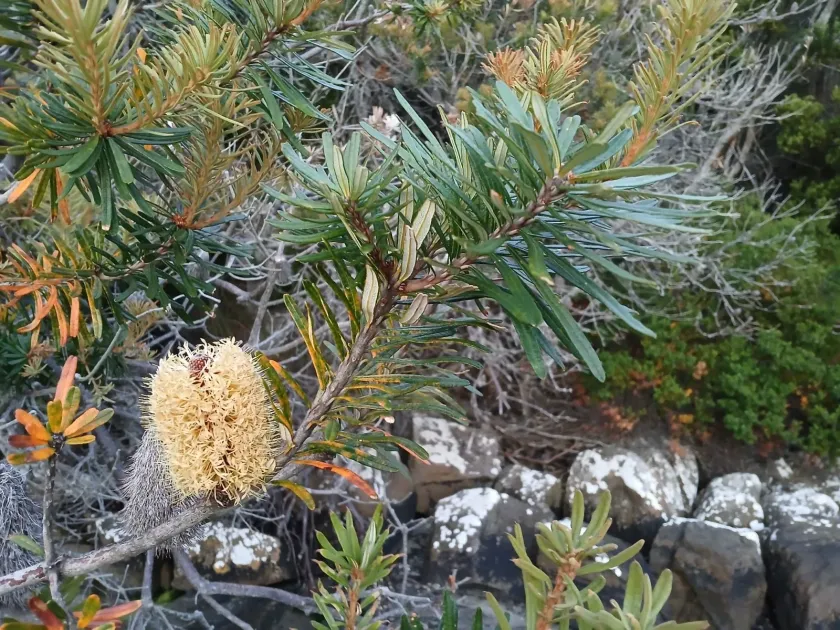
Description
Sowing dates
The propagation of Banksia marginata from seed is best performed in early spring, ensuring a steady temperature range of 18 to 22 degrees Celsius for optimal germination.
Seeds are enclosed in woody follicles and often require heat treatment or stratification to break dormancy before being sown into a sterile propagation mix.
Use a coarse, well-draining potting medium consisting primarily of sand and peat, avoiding any fertilizers that contain high levels of phosphorus.
Sow seeds at a shallow depth, just covering them with a thin layer of grit to prevent the seeds from being washed away during the initial watering phase.
Seedlings should be transplanted into deep pots as soon as the first true leaves emerge, as the species develops a long taproot that needs sufficient vertical space.
Growing requirements
Silver banksia is a robust member of the Proteaceae family, characterized by its serrated foliage and unique cylindrical inflorescences that attract native pollinators.
This species demands full sun exposure to maintain its compact growth habit and to promote the development of its distinctive golden flower spikes.
The soil must be well-drained and acidic, mimicking the sandy, nutrient-poor soils characteristic of its native Australian coastal and heathland environments.
Adequate airflow is critical for this species; stagnant air combined with humidity can lead to fungal infections and decline in overall plant health.
While drought-tolerant once established, young plants require consistent but careful monitoring of soil moisture to ensure the root system does not dry out completely.
Main diseases and pests
Root rot, specifically caused by Phytophthora species, is the most severe threat to Banksia marginata, often resulting from poor soil drainage.
Mealybugs and scale insects are common pests that colonize the underside of leaves and stems, sucking essential nutrients and weakening the plant structure.
Leaf miners can occasionally create unsightly tunnels in the foliage, though they rarely threaten the survival of a healthy, vigorous specimen.
Nutrient toxicity, especially excessive phosphorus uptake, leads to yellowing foliage and stunted growth, often fatal if common commercial fertilizers are used.
Regular maintenance practices, including the removal of dead wood and the application of systemic fungicides, are essential for maintaining plant vigor.