
Banksia goodii
Banksia goodii
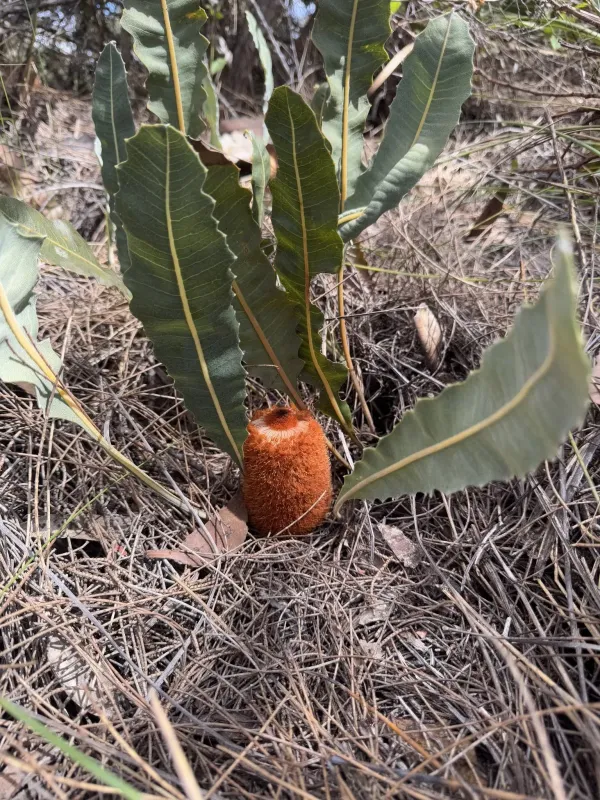
Description
Growing requirements
Banksia goodii, commonly known as Good's Banksia, is a prostrate shrub belonging to the Proteaceae family. It is endemic to a restricted range in the south-west of Western Australia, making it a rare and ecologically significant species.
This plant exhibits a distinct prostrate growth habit, often forming mats along the ground. Its leaves are serrated, stiff, and arranged in whorls, providing a unique texture that differentiates it from other species within the genus.
Agricultural and horticultural success depends heavily on replicating its native soil conditions. It requires very sandy, well-draining soils with extremely low levels of phosphorus. High phosphorus levels are known to be toxic to this species.
Climate requirements include a Mediterranean-style environment. The plant thrives in areas with dry, warm summers and mild, wet winters, provided that the root zone is protected from waterlogging during rainy periods.
Economic use of Banksia goodii is essentially limited to specialized ornamental cultivation and conservation efforts. It is highly valued by native plant enthusiasts, though its propagation remains a challenge for professional nurseries.
Main diseases and pests
The primary threat to the survival of Banksia goodii in both natural and cultivated settings is the root-rot pathogen Phytophthora cinnamomi. This water mold thrives in damp conditions and attacks the root system, causing rapid decline.
Insect pests such as wood-boring larvae and various foliage-eating beetles can cause significant damage. These pests can weaken the plant, making it more susceptible to environmental stressors and secondary fungal infections.
Over-irrigation or poor site drainage is a major management error. Excessive moisture leads to root asphyxiation, which is frequently confused with drought symptoms by inexperienced growers.
Foliar diseases, including various leaf spot fungi, can occur when air circulation is poor or humidity is excessively high. These pathogens may reduce the aesthetic value of the foliage and hinder growth.
Mechanical damage to the shallow root system must be avoided at all costs. Since the plant relies on proteoid roots to extract nutrients, any soil disturbance can disrupt these delicate structures and significantly reduce the plant's health.