
Banksia ericifolia
Banksia ericifolia
Description
Growing requirements
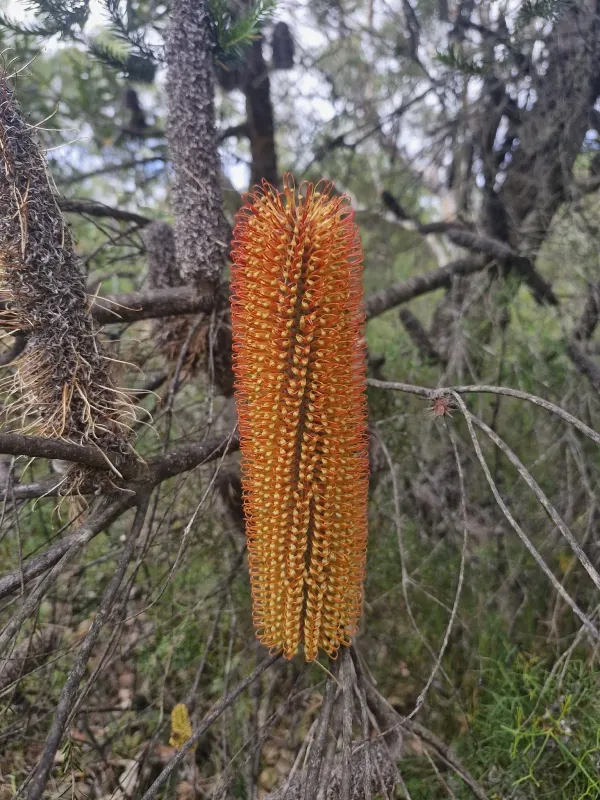
Banksia ericifolia, known as the Heath-leaved Banksia, is a perennial evergreen shrub belonging to the Proteaceae family. Native to the coastal regions of eastern Australia, it is well-regarded for its large, cylindrical flower spikes that appear in vibrant shades of orange or red throughout the winter months.
The cultural requirements for Banksia ericifolia are specific and centered around well-drained, sandy, or loamy soils. These plants are adapted to phosphorus-poor environments, making the application of standard garden fertilizers potentially harmful; specialized, low-phosphorus formulations are mandatory for success.
Climatically, this species thrives in temperate to subtropical conditions. While it can withstand light frosts, prolonged freezing temperatures will damage foliage and stems. In colder regions, container cultivation is highly recommended to ensure the plant can be moved to a protected environment during winter.
Full sun exposure is essential for maintaining a compact growth habit and stimulating heavy blooming. Plants grown in shaded areas tend to become leggy and rarely produce the characteristic inflorescences that make the species a popular choice for native-themed landscaping and horticulture.
Watering practices should be carefully managed; while the plant requires moisture for young specimens, established banksias are drought-tolerant but susceptible to root rot in saturated conditions. Regular pruning after flowering helps maintain the plant's shape and prevents the wood from becoming overly sparse.
Main diseases and pests
The most significant threat to Banksia ericifolia is root rot caused by the soil-borne pathogen Phytophthora cinnamomi. This fungal disease spreads rapidly in wet, poorly drained soils, often proving fatal to the entire plant; therefore, maintaining soil structure and drainage is the primary defense strategy.
Pests such as scale insects and spider mites may also affect the plant under poor ventilation or stress conditions. Integrated pest management, focusing on manual inspection and the use of targeted biological controls, is preferred over the application of broad-spectrum chemical pesticides, which the foliage may be sensitive to.