
Banksia dentata
Banksia dentata
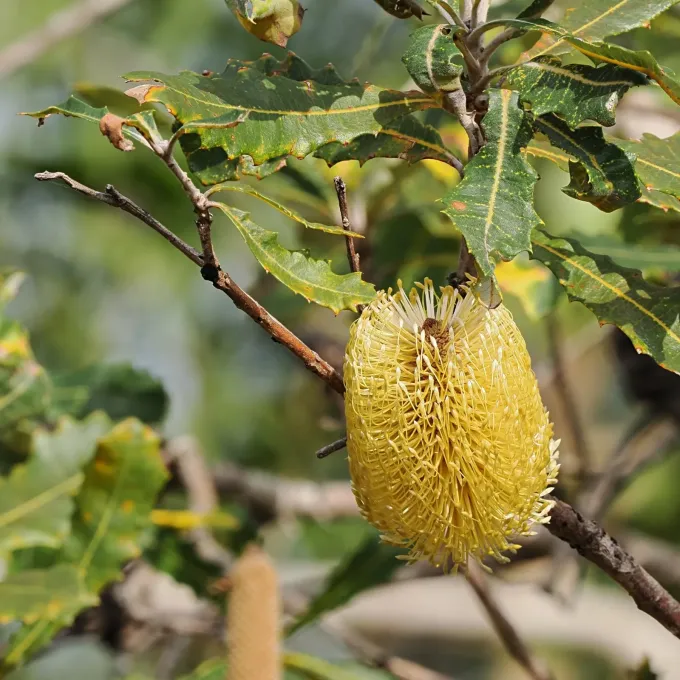
Description
Growing requirements
Banksia dentata, commonly known as the tropical banksia, is a tree species belonging to the Proteaceae family. It is distinct for its large, leathery leaves with serrated margins and its ability to thrive in tropical climates.
The plant is native to the coastal and lowland regions of Northern Australia, New Guinea, and the Aru Islands. It is well-adapted to swampy or periodically wet environments, which sets it apart from many other Proteaceae species.
Cultivation requires acidic, well-draining soils. Like many members of the genus Banksia, it has specialized proteoid roots that allow it to absorb nutrients efficiently from poor soils, but these roots are sensitive to high phosphate levels in fertilizers.
It prefers full sun exposure to maintain its structural integrity and encourage flowering. Providing adequate space is essential, as the tree requires room to develop its characteristic broad, woody canopy.
The species serves as a critical ornamental component in tropical landscaping. Its unique flower spikes not only add aesthetic value but also play an important role in supporting local biodiversity by attracting nectar-feeding birds.
Main diseases and pests
Phytophthora cinnamomi, a soil-borne water mold, represents the most significant threat to Banksia dentata. It causes root rot, which is often irreversible once the symptoms become visible in the canopy.
Insect pests, including wood-boring beetles and lepidopteran larvae, can damage the stems and foliage, potentially providing entry points for secondary fungal infections.
Leaf spots caused by various fungi can occur during prolonged periods of high humidity and poor ventilation. Keeping the area under the tree clear of leaf debris helps reduce the spread of spores.
Nutrient toxicity, particularly resulting from the over-application of standard phosphorus-rich fertilizers, can lead to severe chlorosis and plant decline.
Proper management involves strictly avoiding phosphorus-heavy products and ensuring that the soil drainage is optimal to prevent the conditions that favor pathogen proliferation.