
Hill Banksia
Banksia collina
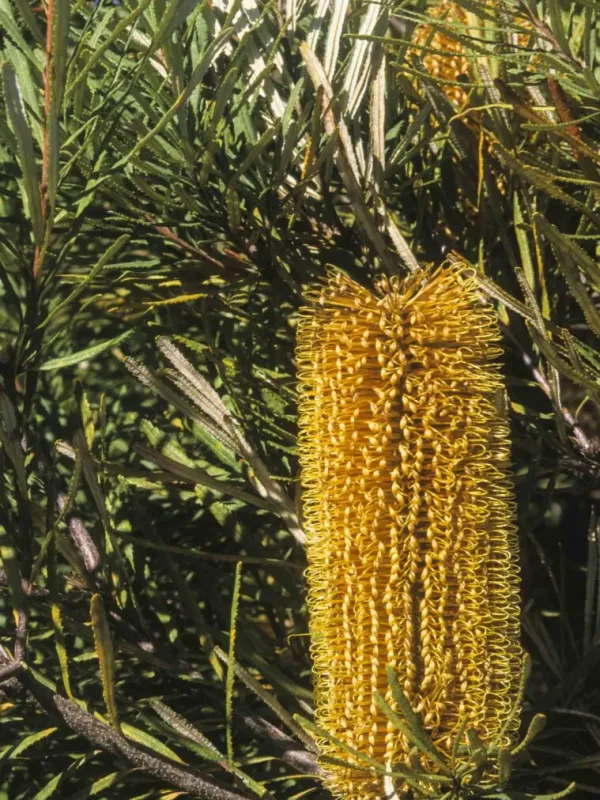
Description
Growing requirements
Hill Banksia (Banksia collina) is a distinctive member of the Proteaceae family. Native to the eastern regions of Australia, this evergreen shrub has evolved to thrive in nutrient-poor, sandy, or rocky soils, showcasing remarkable resilience in arid environments.
The primary requirement for successful cultivation is impeccable drainage. The root system of this species is highly specialized and prone to rot if exposed to waterlogged conditions, making it essential to provide a well-aerated, coarse-textured substrate.
Sun exposure is critical for the development of its signature flower spikes. Ideally, the plant should be positioned in a location that receives full sun for the majority of the day, ensuring vigorous growth and maintaining the structural integrity of the shrub.
Climate adaptability is limited to subtropical and warm-temperate regions. Because the plant lacks significant frost tolerance, it is often kept in pots in cooler climates, allowing gardeners to move it to a greenhouse during the winter months.
Nutrient management requires caution, as Banksia species have evolved to thrive in low-phosphorus soils. Using standard fertilizers can be toxic to the plant, so one must exclusively use fertilizers formulated for native Australian flora that are free from high phosphorus levels.
Main diseases and pests
The most devastating threat to Hill Banksia is Phytophthora root rot. This soil-borne pathogen flourishes in damp conditions and can kill an established plant within a short period if drainage is not strictly managed.
Scale insects and mealybugs are common pests that colonize the leaves and woody stems. By feeding on plant sap, these pests can cause yellowing, stunted development, and leaf drop if not treated with systemic insecticides.
Fungal leaf spots can occur when humidity levels are excessively high and air circulation is poor. Keeping the foliage dry and ensuring adequate spacing between plants significantly reduces the incidence of these infections.
Root-knot nematodes can impede nutrient uptake by damaging the delicate root hairs. To mitigate this risk, gardeners should always use sterile potting mixes rather than untreated garden soil when planting in containers.
Chlorosis is a frequent issue if the pH level of the soil shifts away from the slightly acidic range. Regular testing and the use of iron chelates or appropriate acidic amendments help keep the foliage vibrant and the plant physiologically active.