
Wallum Banksia
Banksia aemula
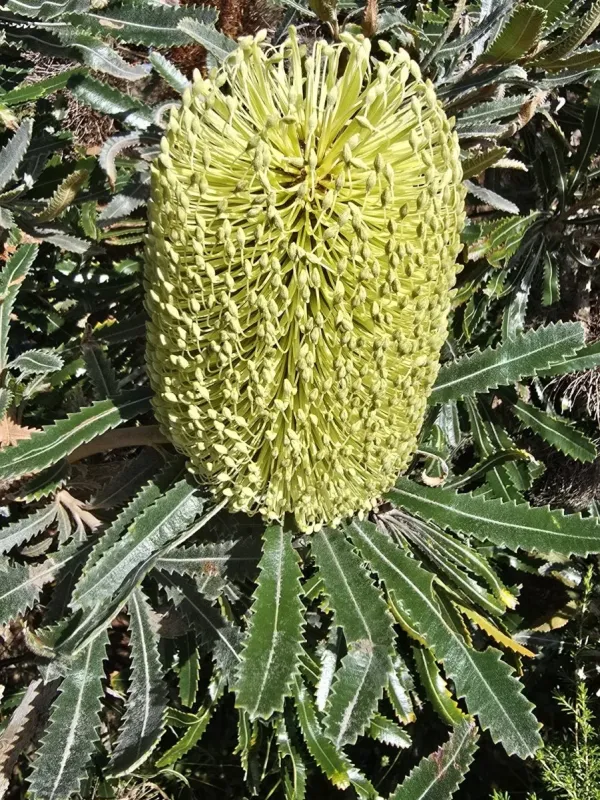
Description
Sowing dates
Propagation of Banksia aemula is primarily achieved through seeds, which are housed within woody follicles that require specific conditions to release.
In natural settings, fire triggers the release of seeds, but in cultivation, controlled heat treatment is used to open the follicles and extract the viable material.
Seeds should be sown in a free-draining, nutrient-poor substrate that lacks phosphate, as members of the Proteaceae family are highly sensitive to this element.
The ideal time for sowing is during the spring when temperatures are consistent, allowing for steady germination without the risk of frost damage.
Maintaining a delicate balance of moisture is essential; the soil should be moist but never saturated, as the seeds are prone to rotting in stagnant water.
Growing requirements
Banksia aemula, a member of the Proteaceae family, is a slow-growing woody shrub native to the coastal sandplains of eastern Australia.
The plant thrives in full sun, which is necessary to stimulate the development of its characteristic yellow-green flower spikes and dense foliage.
It demands highly acidic, sandy, and well-draining soil conditions; any heavy clay or fertile garden soil will likely result in the death of the root system.
Climate-wise, it prefers mild, frost-free environments and is well-adapted to the harsh conditions of nutrient-deficient coastal scrublands.
Water requirements are relatively low once the plant is established, as it has developed physiological adaptations to survive in arid and nutrient-poor environments.
Main diseases and pests
The primary threat to Banksia aemula is Phytophthora root rot, a water-borne disease that thrives in poorly drained soil and causes rapid decline.
Insects such as aphids and scale insects can attack the young shoots and flower spikes, causing deformation and reducing the aesthetic quality of the plant.
Leaf-spotting fungi may emerge during periods of prolonged high humidity, especially if the air circulation around the canopy is insufficient.
Improper fertilization, particularly with products high in phosphorus, is a major non-biological threat that can lead to acute toxicity and plant mortality.
To maintain health, growers should monitor for early signs of infestations and ensure that the root zone remains dry and aerated at all times.