
Orchis scopulorum
Orchis scopulorum
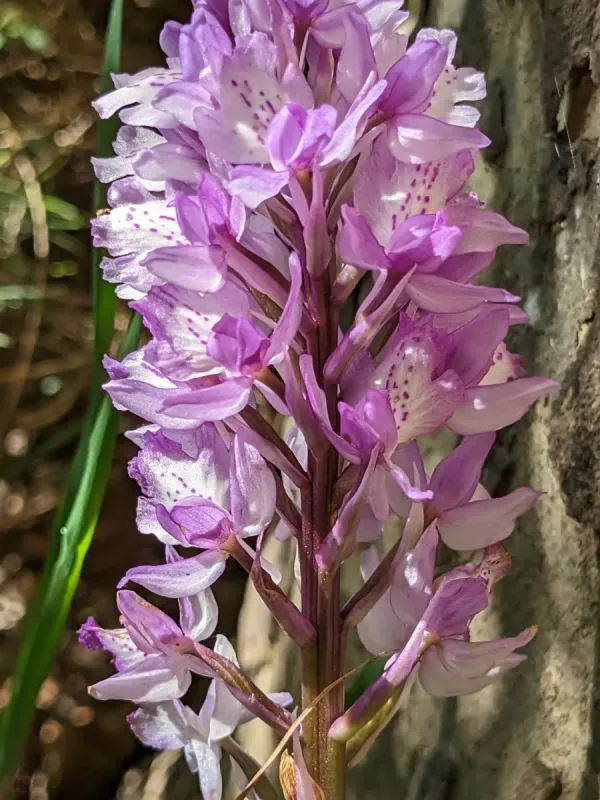
Description
Growing requirements
Orchis scopulorum is a perennial herbaceous plant belonging to the Orchidaceae family. It is distinct for its specific habitat preferences, naturally occurring on rocky outcrops and limestone terrains, which influence its specific biological needs in cultivation.
Botanically, the plant features specialized root tubers that act as storage organs for nutrients and water. Its stem is slender, typically reaching 20–40 cm in height, culminating in a spike-like inflorescence, which represents the primary visual and decorative characteristic of the species.
Cultivation requires a well-drained, slightly alkaline substrate with high calcium content. Water management is critical, as stagnant moisture causes immediate root rot, making the use of slopes or gravel-rich soil compositions a necessity for maintaining a healthy plant.
Climatic requirements favor moderate temperature ranges with distinct seasonal transitions to trigger dormancy phases. Orchis scopulorum thrives in open, sun-exposed locations but requires protection against high wind speeds, which can cause mechanical damage to the inflorescences.
The plant has potential value for specialized pharmaceutical applications and high-end botanical collections. However, due to its status as a rare species, its large-scale cultivation is rare, and it is usually kept under conservation-focused horticultural practices.
Main diseases and pests
Fungal diseases, particularly root and crown rot, represent the primary threat to the stability of Orchis scopulorum. These pathogens proliferate rapidly in poorly ventilated soils or in environments with excessive humidity during dormant periods.
Pest pressure is mainly exerted by mollusks such as slugs and snails, which feed on succulent leaves and emerging buds. Aphids can also be problematic, not only by direct sap-feeding but also by transmitting viruses that are often lethal to wild orchid species.
Preventative measures involve maintaining a strict drainage protocol and ensuring proper spacing to allow air circulation. Avoiding nitrogen-rich fertilizers is recommended, as they produce soft, vulnerable tissue that invites both pest infestations and fungal infections.
Treatment should be focused on biological control and physical intervention, as these orchids are highly sensitive to strong chemical substances. Removing affected plant parts and adjusting the substrate properties are often more effective than synthetic fungicides.
Long-term health is heavily dependent on mycorrhizal associations, which are essential for nutrient uptake. In the absence of these symbiotic fungi, plants frequently struggle to survive, making the inoculation of the growing medium with specific fungi a recommended practice.