
Orchis punctulata
Orchis punctulata
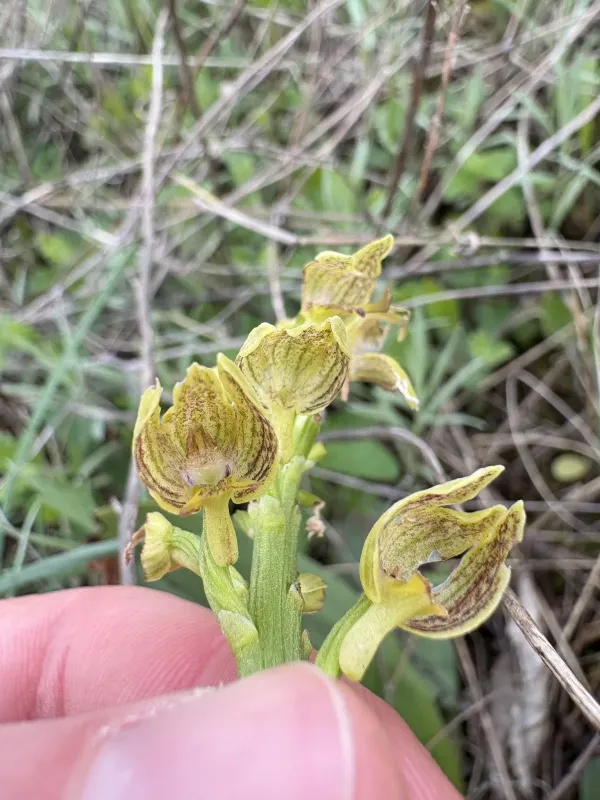
Description
Growing requirements
Orchis punctulata is a perennial plant belonging to the Orchidaceae family. It is typically found in light woodlands, shrublands, and areas with calcareous soils, reflecting its specific ecological preferences.
The cultivation of this species is highly complex because it relies on a symbiotic relationship with mycorrhizal fungi. Without this interaction, the orchid cannot obtain the necessary nutrients, making soil health and biodiversity crucial.
Regarding soil requirements, the species thrives in well-drained, nutrient-rich substrates with a neutral to slightly alkaline pH. Waterlogging is detrimental, as it quickly leads to the decay of the plant's characteristic tuberous roots.
The climate must be temperate, as the plant is sensitive to extreme frosts. It prefers locations with filtered sunlight, as excessive heat and direct radiation can stress the plant and reduce its flowering vigor.
Botanically, the plant is distinguished by two tubers and a tall, sturdy stem that supports a dense spike of ornate, spotted flowers, which serve as the primary aesthetic feature for collectors and botanists alike.
Main diseases and pests
Fungal diseases affecting the root system are the most significant threat to the health of Orchis punctulata, usually triggered by poor drainage or excessive humidity.
Gastropod pests, such as slugs and snails, are particularly problematic, as they often consume the succulent leaves and young flower buds during the spring growth phase.
Aphids can also pose a threat, particularly if the plant is grown in sheltered or greenhouse environments, leading to distorted growth and reduced vitality.
Competition from fast-growing weeds is another major issue, as the orchid is slow to establish itself and can be easily choked out by more aggressive species.
Anthropogenic pressure and habitat loss remain the most serious long-term threats, severely limiting the distribution of this orchid in its natural range.