
Orchis provincialis
Orchis provincialis
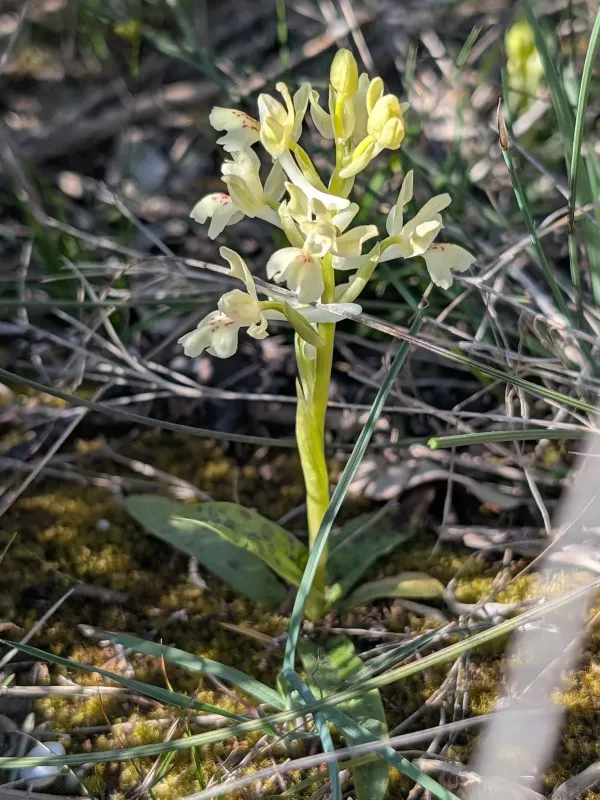
Description
Growing requirements
Orchis provincialis is a perennial herbaceous plant belonging to the Orchidaceae family. It is characterized by the presence of two subterranean tubers that act as storage organs, providing the energy necessary for the plant to emerge and bloom during the spring season.
This species naturally thrives in diverse environments, including sunny meadows, mountain slopes, and light scrublands. It requires a specific microclimate that balances adequate spring moisture with good drainage to prevent the root tubers from succumbing to rot.
Regarding soil preferences, it favors neutral to alkaline soils, particularly those derived from limestone. These substrates ensure the necessary mineral content and physical structure that allow the delicate root systems to develop without excessive compaction.
A crucial biological factor for Orchis provincialis is its dependency on mycorrhizal fungi. The seeds require specific fungal symbionts to germinate and establish, which makes the plant highly sensitive to chemical disturbances or shifts in soil microbial communities.
The geographic distribution is primarily centered in the Mediterranean region. As a wild species, it is not cultivated for agricultural purposes; rather, it is studied for its ecological niche and is protected in many parts of its natural range to prevent habitat loss.
Main diseases and pests
The primary threats to the species involve the destruction of natural habitats due to agricultural expansion and livestock grazing. Excessive trampling by animals and the conversion of traditional meadows into intensive fields pose a direct risk to population stability.
Plant diseases, particularly fungal rots, represent a significant risk, especially during abnormally wet springs. Excessive soil moisture leads to the rapid decay of the tubers, which can devastate local populations by destroying the dormant root system.
Pests, such as slugs and various larvae, can inflict damage on leaves and flowering stalks. While these are natural stressors, they become more impactful when the plant is already weakened by climatic shifts or habitat degradation, leading to reduced reproductive success.
Environmental factors, including climate change, pose a long-term risk. Altered precipitation patterns and higher temperatures can disrupt the timing of insect emergence, thereby preventing effective pollination and seed set for future generations.
Strict conservation practices are essential, as the species is sensitive to environmental changes. Efforts to protect its habitat from fragmentation and over-collection remain the most effective methods for ensuring the survival of this rare and beautiful orchid species.