
Pale-flowered orchid
Orchis pallens
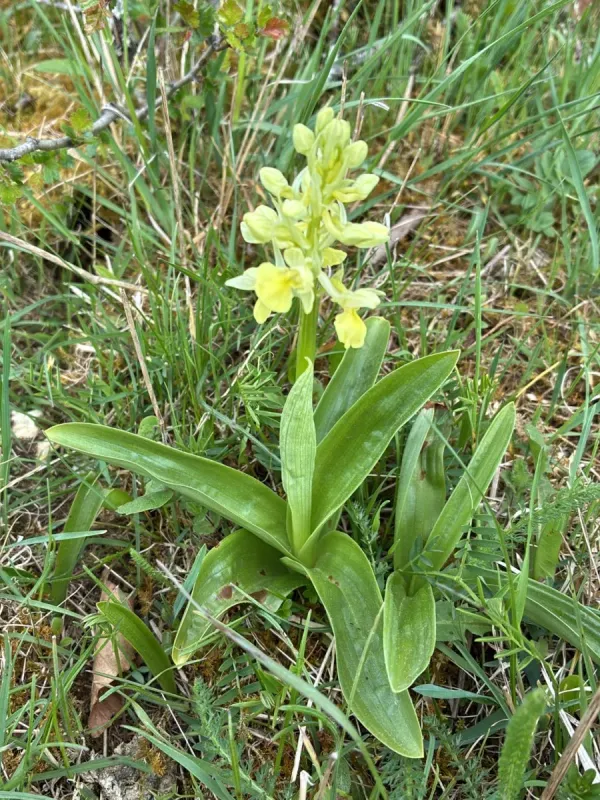
Description
Growing requirements
The Pale-flowered orchid (Orchis pallens) is a perennial herbaceous plant belonging to the Orchidaceae family. It is a spring ephemeral, meaning its active growth cycle is concentrated in the early spring months when soil moisture is optimal.
The species has very specific habitat requirements, typically thriving in deciduous forest clearings, edges, and limestone slopes. It demands well-drained soils, preferably those with a neutral to alkaline pH rich in calcium.
A fundamental biological requirement for this orchid is the presence of specific mycorrhizal fungi in the soil. The orchid requires a symbiotic relationship with these fungi to germinate its seeds, which makes traditional agricultural cultivation virtually impossible.
Regarding lighting, the plant prefers dappled sunlight or partial shade. Direct, harsh sunlight can damage the sensitive leaves and cause the plant to enter its dormant phase prematurely.
Due to its high sensitivity to habitat disturbance and low reproductive rate, the Pale-flowered orchid is not an agricultural crop but rather a protected wild plant that requires conservation efforts rather than cultivation.
Main diseases and pests
The primary threat to the Pale-flowered orchid is the destruction of its natural habitat. Human activities such as land clearing, industrial agriculture, and forestry management pose significant risks to stable populations.
During the summer dormancy period, the plant is susceptible to various fungal pathogens if the soil remains waterlogged. Excessive moisture often leads to root and tuber rot, which can be fatal for the plant.
Herbivorous pests, particularly slugs and snails, cause significant damage by feeding on young leaves and succulent flowering stalks during the spring season.
The dependency on specific insect pollinators means that any decline in local entomofauna, often caused by the use of broad-spectrum pesticides, directly impairs the reproductive success of the plant.
Rodents can also pose a threat during the winter months by foraging for the plant's nutrient-rich tubers, especially when ground cover is sparse and the soil is not adequately frozen.