
Mormodes
Mormodes Lindl.
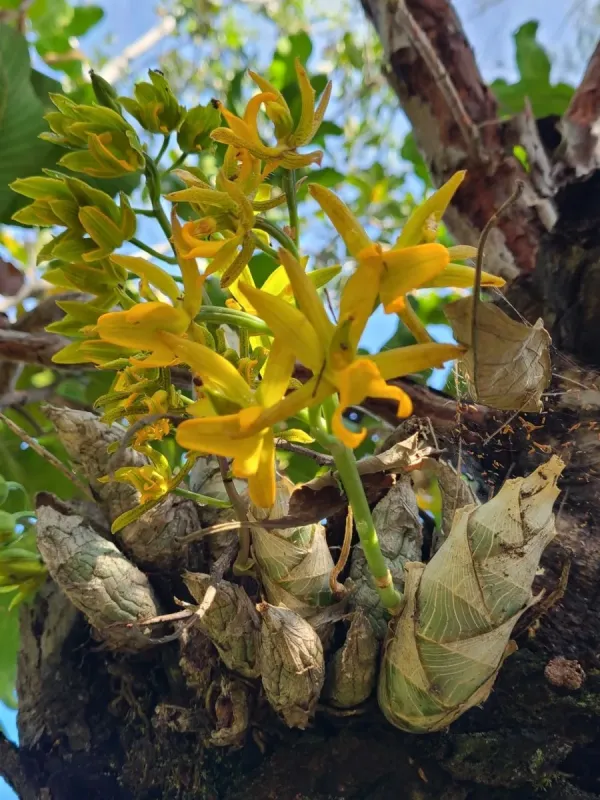
Description
Growing requirements
Mormodes is a genus of showy epiphytic orchids belonging to the family Orchidaceae. Native to the tropical forests of Central and South America, these plants are known for their unique architecture and distinct, highly fragrant flowers.
The growth habit of Mormodes is sympodial, characterized by the development of fleshy pseudobulbs that store water and nutrients. These pseudobulbs undergo a seasonal cycle: they sprout, grow vigorously, bloom, and eventually enter a dormancy period where they shed their leaves.
Lighting requirements for Mormodes are relatively high compared to other orchids. They thrive in bright, filtered light. During the peak of the growing season, protection from the direct midday sun is necessary to prevent tissue damage and sunburn on the foliage.
A well-draining, airy potting medium is essential to ensure root health. Most growers use a mixture of pine bark, perlite, and charcoal, which allows for rapid water drainage and prevents the roots from sitting in stagnant, overly damp conditions.
Temperature management plays a vital role in their development. During the growth phase, moderate to warm temperatures are preferred. However, during the winter rest, keeping the plants in a cooler environment helps trigger the development of inflorescences in the coming spring.
Main diseases and pests
The most common threat to Mormodes is root and stem rot, typically caused by overwatering or insufficient drainage. Once rot sets in, it spreads rapidly throughout the pseudobulbs, often leading to the loss of the entire plant.
Pests such as spider mites, mealybugs, and scale insects frequently target these orchids. Because Mormodes possess succulent-like pseudobulbs, they can easily attract sap-sucking insects that weaken the plant and transmit viral infections.
To control pest infestations, growers should perform regular inspections of the undersides of leaves and the crevices of pseudobulbs. Integrated pest management, including the use of neem oil or systemic insecticides, is recommended for long-term maintenance.
Viral infections are another significant challenge, often appearing as necrotic spots or irregular patterns on the foliage. Since there is no cure for viruses, infected plants must be isolated and disposed of to prevent the spread to other collections.
Maintaining a clean and hygienic environment is crucial. Tools used for pruning or dividing the plants should be sterilized with alcohol or heat before every use to minimize the risk of transferring pathogens from one plant to another.