
Disa bergiusii
Disa Bergius
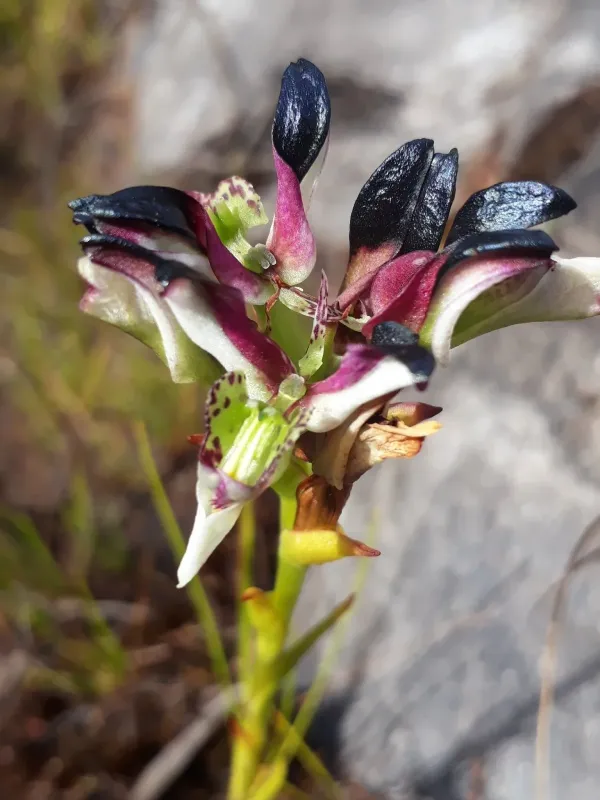
Description
Growing requirements
Disa bergiusii is a distinct species of terrestrial orchid belonging to the Orchidaceae family. Native to the Cape Floristic Region of South Africa, this plant thrives in specialized microclimates, typically occurring in moist meadows and along the margins of natural water sources.
Botanically, the species is characterized by a basal rosette of leaves and an erect inflorescence with uniquely structured flowers. The plant relies on tuberous roots for water and nutrient storage, which supports its survival through fluctuating environmental conditions during the seasonal growth cycle.
To cultivate Disa bergiusii successfully, one must replicate its natural preference for acidic, well-draining, yet consistently moist substrates. The growing medium must provide high aeration to prevent the asphyxiation of the root system while maintaining stable moisture levels.
Climate requirements involve maintaining cool to moderate temperatures with high relative humidity. Growers must provide excellent air circulation to mirror the high-altitude environments where these orchids are naturally found, ensuring the plants do not overheat during peak daylight hours.
The economic and practical utilization of this plant is confined to botanical collections and professional horticulture. It is not an agricultural commodity but remains a significant subject for the study of orchid ecology and the conservation of rare floral species.
Main diseases and pests
The most significant threats to Disa bergiusii are fungal pathogens that proliferate in stagnant conditions. Poor drainage or waterlogged soil will almost certainly lead to the rapid rot of tubers, making substrate management the top priority for any grower.
Pests such as spider mites and thrips pose a constant threat, especially if the air humidity drops below required levels. Effective management includes regular monitoring and the use of soft, orchid-safe biological control methods to mitigate outbreaks without damaging plant tissue.
Water quality is a critical factor, as this species is sensitive to mineral salt accumulation. Using high-purity water is essential, as tap water with high total dissolved solids can cause root burn and inhibit the uptake of necessary nutrients over time.
Light-related stress is a common issue for those new to this species. Providing bright but diffused light is necessary, as direct sunlight can cause immediate dehydration and necrosis of the sensitive leaves and floral structures.
Finally, maintaining biosecurity is vital to prevent the spread of orchid viruses. Strict sanitation practices regarding tools and growing surfaces must be enforced to ensure that the fragile balance of the growing environment remains undisturbed by pathogens.