
Dendrolobium pachyphyllum
Dendrolobium pachyphyllum
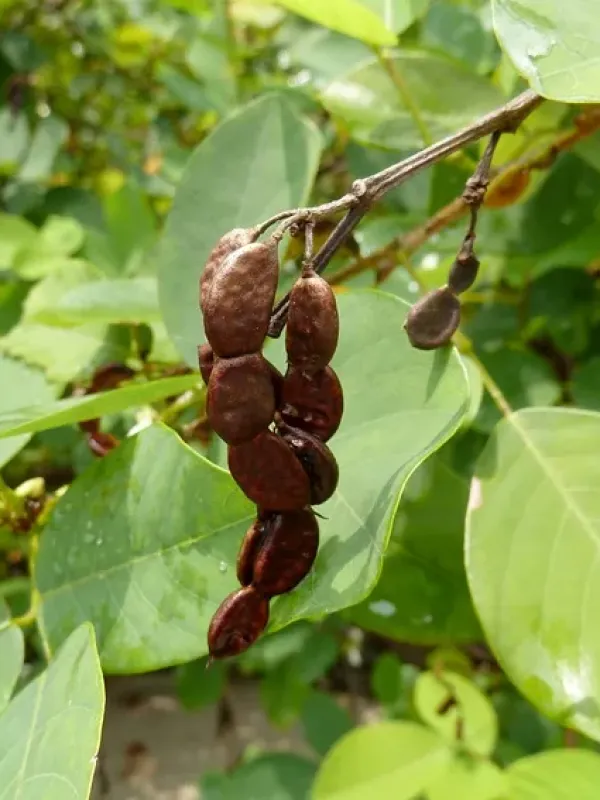
Description
Growing requirements
Dendrolobium pachyphyllum is a woody shrub belonging to the Fabaceae family. This species is native to the tropical regions of Southeast Asia, where it thrives in humid and warm environments.
The crop requires well-drained, nutrient-rich soils to maximize its growth potential. It is particularly sensitive to waterlogging, making proper soil preparation and drainage systems essential for agricultural success.
Climatically, the plant prefers constant tropical temperatures. It does not tolerate frost or sudden cold spells, which can significantly damage its foliage and limit its overall survival rate.
Light exposure is a vital component of its development. While the plant can tolerate partial shade, full exposure to sunlight typically results in faster biomass accumulation and stronger stems.
Standard agronomic practices for this plant include periodic fertilization to replenish soil nutrients and systematic weeding to prevent competition from invasive grasses that can stunt growth in early development stages.
Yield
The primary economic value of Dendrolobium pachyphyllum lies in its use as a high-protein forage crop. Its leaves are frequently harvested and processed for livestock feed in local agricultural systems.
As a legume, this plant plays a crucial role in nitrogen fixation. By incorporating it into crop rotations or agroforestry setups, farmers can naturally improve soil fertility without relying heavily on synthetic inputs.
Yield productivity is optimized by implementing a rotational harvest schedule. Regular pruning encourages dense branching, which significantly increases the volume of green biomass produced per plant.
The crop is also recognized for its role in soil conservation. Its deep and branched root system effectively stabilizes the substrate, making it a useful tool for preventing erosion on sloping farmland.
Furthermore, it is increasingly studied for its potential role in biomass production for green energy and its contribution to enhancing biodiversity within sustainable farming systems.
Main diseases and pests
Fungal pathogens remain the most significant threat to Dendrolobium pachyphyllum, especially in areas with high humidity. Leaf spot diseases are common and can reduce the nutritional quality of the forage.
Insect pests, including aphids and scales, often target the succulent new growth of the plant. If left untreated, these infestations can cause significant wilting and stunt the development of young shoots.
Over-irrigation is a physiological threat that often leads to root rot. Careful management of soil moisture levels is necessary to keep the root system healthy and resilient against secondary infections.
Preventative maintenance is the primary defense strategy. This includes maintaining proper plant spacing to ensure adequate airflow, which helps keep the foliage dry and limits the spread of airborne spores.
Integrated pest management (IPM) is strongly recommended for this crop. By monitoring pest levels and using biological controls, growers can protect their yields while ensuring the safety of the forage for livestock.