
Danhatchia australis
Danhatchia australis
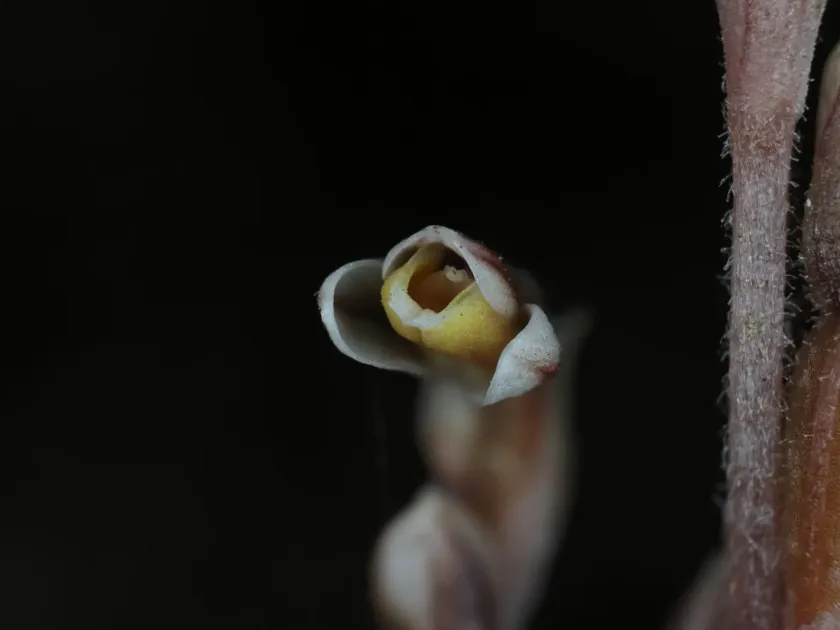
Description
Growing requirements
Danhatchia australis is a fascinating and rare species belonging to the Orchidaceae family. It is distinct from conventional agricultural crops due to its mycoheterotrophic nature, meaning it relies entirely on a symbiotic relationship with soil fungi to acquire nutrients rather than photosynthesis.
The plant is native to specific regions of New Zealand and eastern Australia. It thrives in humid forest environments, where deep leaf litter provides the necessary conditions for the development of fungal networks that support the orchid's survival throughout its entire life cycle.
Botanically, Danhatchia australis is a non-photosynthetic plant. It lacks chlorophyll, which results in the absence of green foliage. The plant spends most of its life underground, with only the inflorescence appearing above the surface during the flowering phase to produce seeds.
The environmental requirements for this orchid are extremely strict. It requires a stable, undisturbed soil microclimate where specific mycorrhizal fungi are present. Without these symbiotic partners, the plant cannot germinate or grow, which prevents any attempt at traditional cultivation.
This species has no agricultural or commercial utility. Due to its high sensitivity and ecological requirements, it is strictly monitored in the wild and should be protected within its natural habitat rather than being subjected to farming techniques or commercial exploitation.
Main diseases and pests
The primary threat to Danhatchia australis is the destruction or modification of its native forest habitat. Any activity that disturbs the soil profile, such as logging, urban development, or compaction, disrupts the fungal networks essential for the plant's nourishment.
Climate change poses a significant risk to the species by altering moisture levels in the forest floor. Since the associated fungi require consistent humidity to remain active, drought periods can lead to the rapid decline of both the fungi and the orchid population dependent on them.
Invasive plant species can outcompete native flora, indirectly altering the composition of the soil and potentially displacing the fungi upon which the orchid relies. This creates a cascade effect that reduces the survival chances of this highly specialized orchid.
While various soil-borne pests or diseases could theoretically impact the plant, these are secondary to the catastrophic loss of the symbiotic partnership. When the ecosystem is intact, the orchid effectively manages its presence in the natural forest cycle.
Conservation is the only viable approach for this species. There are no agricultural pesticides or fertilizers recommended for it, as any chemical intervention would likely kill the delicate fungal partners, causing irreparable harm to the specimen.