
Frog orchid
Dactylorhiza viridis
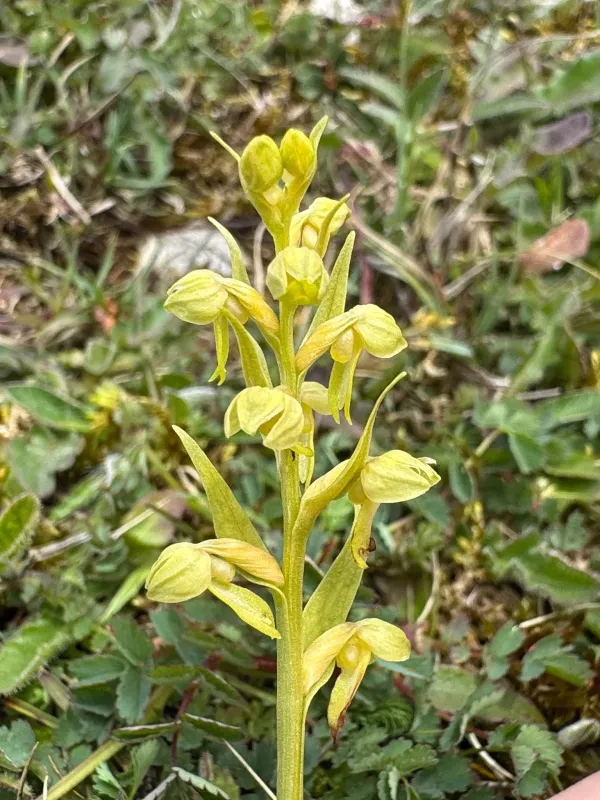
Description
Growing requirements
The Frog orchid, scientifically known as Dactylorhiza viridis, belongs to the Orchidaceae family. It is a perennial herbaceous plant recognized for its inconspicuous green flowers and its specific preference for undisturbed habitats.
The species has a broad holarctic distribution, appearing in various ecosystems ranging from alpine meadows to grassy woodland clearings. It thrives in regions with relatively stable moisture levels and temperate climates.
Botanically, the plant features distinct palmate tubers and a leafy stem that can reach heights of up to 30 centimeters. The leaves are typically ovate to lanceolate, arranged in an alternate pattern along the length of the stalk.
Optimal growth requires well-drained but consistently moist soil conditions. The plant is highly sensitive to soil acidity and fertility levels, requiring a balanced environment that supports its specific fungal partners.
The life cycle of the Frog orchid is strictly dependent on mycorrhizal fungi. These fungi are essential for the germination of its microscopic seeds and the long-term nutritional support of the mature plant, making artificial propagation extremely difficult.
Main diseases and pests
The primary threat to the Frog orchid is the degradation of its natural habitat, primarily caused by the drainage of wetlands and intensive agricultural land management practices.
Excessive use of chemical fertilizers and pesticides disrupts the sensitive balance of soil fungi, which the plant depends on for survival, leading to a decline in population numbers.
Overgrazing and untimely mowing can severely impact the plant's ability to complete its reproductive cycle, as the destruction of the aerial parts prevents the formation of viable seeds.
Climate change, manifesting as shifts in precipitation patterns, poses a significant risk to the species by altering the moisture levels in its typical growing sites.
As a rare and vulnerable member of the orchid family, it is susceptible to competition from more aggressive plant species that thrive under conditions of nutrient-enriched or disturbed soil.