
Traunsteiner's marsh orchid
Dactylorhiza traunsteineri
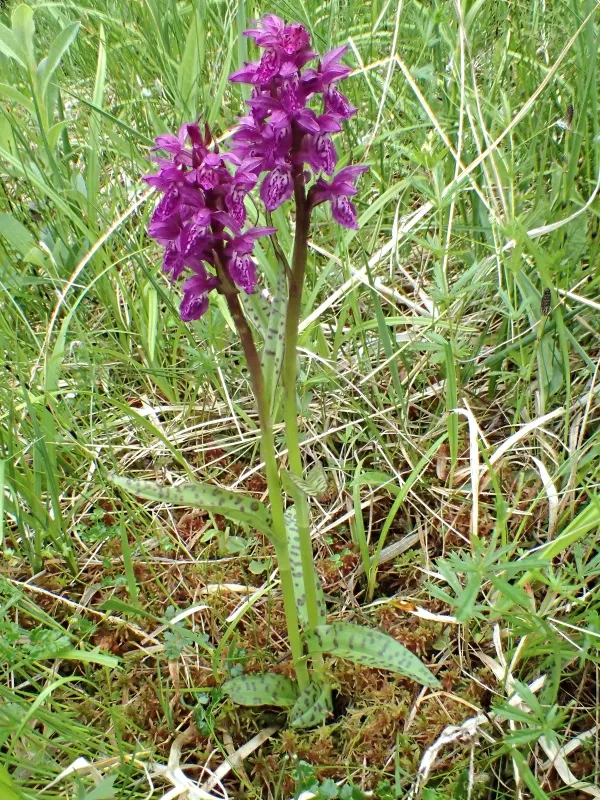
Description
Growing requirements
Traunsteiner's marsh orchid (Dactylorhiza traunsteineri) is a perennial herbaceous plant belonging to the Orchidaceae family. It is a highly specialized plant that is not cultivated as an agricultural crop, but rather studied by botanists and conservationists due to its rarity.
The plant is native to parts of Europe, typically inhabiting fens, quaking mires, and wet calcareous meadows. It requires a stable hydrological regime where the water table remains close to the surface, which is essential for its specialized root system to function correctly.
Botanically, it is recognized by its slender stem and narrow, often spotted leaves. The underground portion consists of palmate tubers, which are characteristic of the genus Dactylorhiza. The plant blooms with small, delicate flowers arranged in a loose spike.
The life cycle of this orchid is strictly dependent on mycorrhizal fungi in the soil. These fungi provide essential nutrients to the germinating seeds and the adult plant. Without this specific symbiotic relationship, the orchid cannot survive or reproduce, making artificial cultivation extremely difficult.
In terms of human use, Traunsteiner's marsh orchid has no agricultural utility. It is strictly protected under international and local laws as an endangered species. Efforts are primarily directed toward preserving its remaining natural habitats from drainage and development.
Main diseases and pests
The primary threat to the stability of Dactylorhiza traunsteineri populations is the drainage of wetlands for agricultural expansion or land reclamation. Lowering the water table rapidly destroys the niche requirements necessary for the plant's survival.
Other significant threats include water eutrophication and pollution from nearby industrial or agricultural runoff, which alter the soil chemistry and negatively impact the symbiotic fungi. Additionally, the invasion of aggressive, non-native plant species can lead to habitat competition and shading out the light-dependent orchid.