
Southern marsh orchid
Dactylorhiza praetermissa
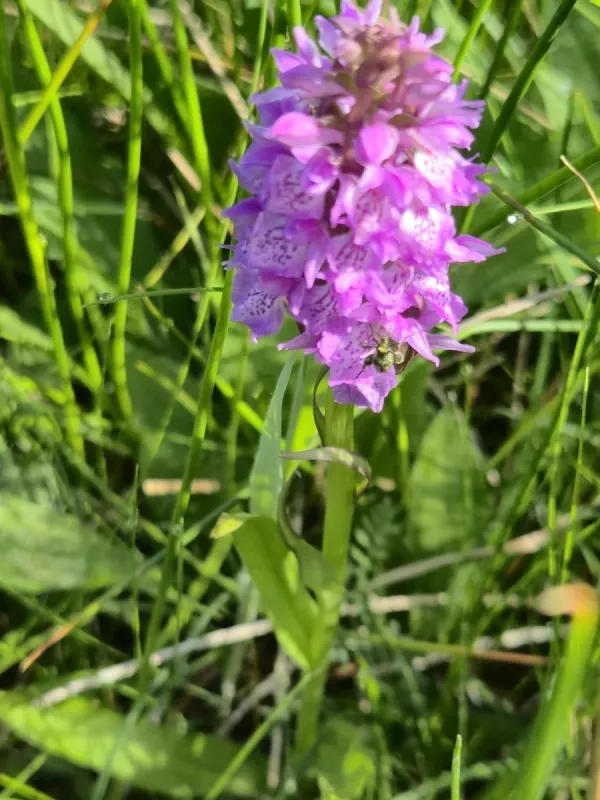
Description
Growing requirements
The Southern marsh orchid (Dactylorhiza praetermissa) is a herbaceous perennial plant belonging to the Orchidaceae family. It is natively distributed across Western Europe, primarily thriving in damp grasslands, fens, and along watercourses where the soil remains consistently moist.
The plant grows from palmately lobed tubers, which are a characteristic feature of the Dactylorhiza genus. These structures store essential nutrients, allowing the plant to survive dormancy and emerge vigorously during the spring season when temperatures become favorable.
Success in cultivation requires a site with damp, humus-rich soil that is neutral to slightly alkaline in reaction. The species is well-adapted to temperate climates, showing significant frost hardiness, provided that waterlogging does not occur during the coldest months.
A critical factor for the growth of Dactylorhiza praetermissa is the presence of specific mycorrhizal fungi in the soil. These symbionts assist the orchid in nutrient uptake, making the plant difficult to establish in sterile or overly processed potting media.
The plant is prized for its tall, dense spikes of pinkish-purple flowers that appear in early summer. Its upright habit and striking color palette make it a preferred choice for naturalistic planting schemes and bog garden environments.
Main diseases and pests
The most significant threat to the Southern marsh orchid is the destruction of its symbiotic relationship with soil fungi, which is often caused by the excessive use of mineral fertilizers or chemical fungicides.
Slugs and snails present a constant threat to the developing foliage and flower spikes, requiring vigilant monitoring and organic protection methods, especially during wet springs.
Fungal rots, specifically affecting the root tubers, are common when plants are placed in substrates that lack adequate drainage, leading to stagnation and rapid tissue degradation.
Viral infections transmitted by sap-sucking insects can cause stunted growth and mottling of leaves, significantly reducing the vigor of the plant over subsequent growing seasons.
Climate change-induced droughts pose a serious risk to wild and cultivated populations alike, as the species lacks mechanisms to tolerate extended periods of moisture deficiency.