
Robust marsh orchid
Dactylorhiza elata
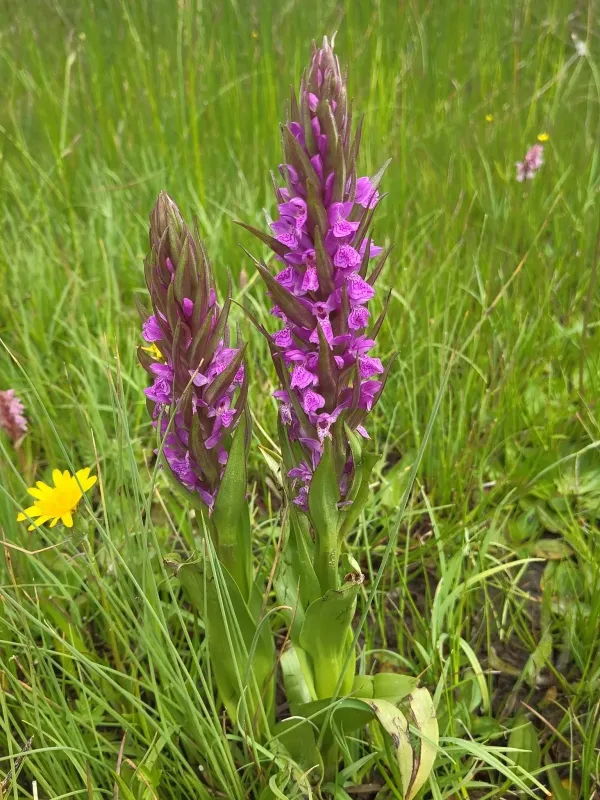
Description
Growing requirements
The robust marsh orchid (Dactylorhiza elata) is a perennial plant belonging to the Orchidaceae family. It is native to Southwestern Europe and Northwestern Africa, where it thrives in damp meadows and along the margins of water bodies.
Botanically, the species is distinguished by its palmately lobed tubers and tall, leafy stems that can reach up to 90 centimeters in height. The inflorescence is a dense, showy spike of purple to magenta flowers that bloom in early summer.
To cultivate this species successfully, it is essential to provide consistently moist soil conditions throughout the growing season. The plant performs best in partially shaded locations where the soil does not dry out completely during hot weather.
The ideal soil substrate should be rich in organic matter, such as peat or leaf mold, and possess a neutral to slightly acidic pH. Good drainage is crucial, despite the plant's love for moisture, to prevent waterlogging around the root system.
Agricultural management includes light mulching to maintain soil temperature and moisture. Fertilizer applications should be very low, as orchids are sensitive to excessive mineral salts, which can damage their delicate symbiotic mycorrhizal relationships.
Main diseases and pests
The primary threats to Dactylorhiza elata include various fungal pathogens, specifically root and crown rots caused by stagnant water and poor soil aeration.
Slugs and snails are major pests that frequently feed on young shoots and buds during the spring, which can lead to significant aesthetic and physiological damage.
Aphid infestations may occur on the flower spikes, draining sap and potentially acting as vectors for plant viruses, which significantly reduces the plant's vigor.
Integrated pest management strategies involve monitoring for mollusks and providing a well-ventilated growing environment to minimize fungal proliferation.
Sanitation practices, such as the removal of dead or decaying plant material before winter, are critical to prevent the overwintering of spores and larvae within the cultivation area.