
Sparrow's lady's slipper
Cypripedium passerinum
Description
Growing requirements
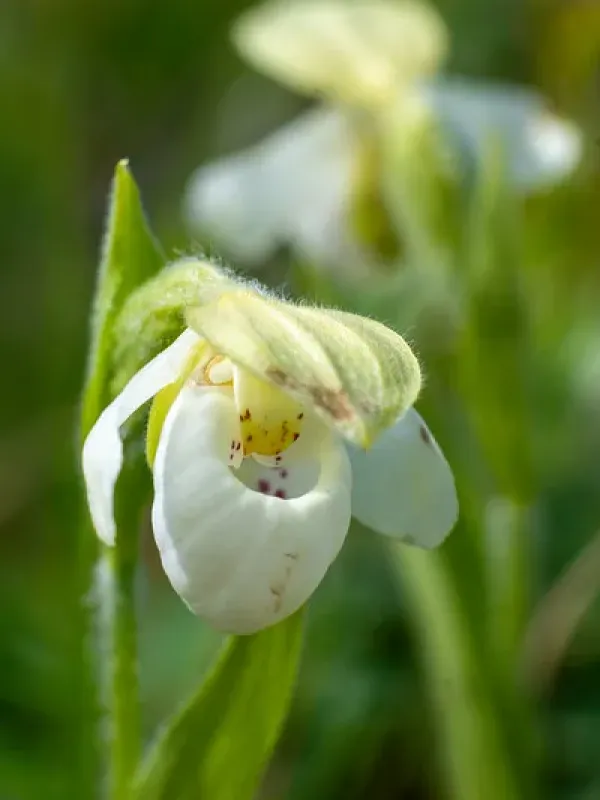
The sparrow's lady's slipper (Cypripedium passerinum) is a hardy perennial orchid species belonging to the family Orchidaceae. Known for its small, delicate flowers, it is uniquely adapted to thrive in cold climates.
Originating from the northern regions of North America, this species is frequently found in boreal forests, often occurring in mossy, lime-rich environments near water sources. It is highly regarded by botanists for its resilience in subarctic temperatures.
Cultivation of this orchid requires an environment that closely replicates its natural habitat. The soil must be well-drained yet consistently moist, characterized by a neutral to slightly alkaline pH, often enriched with organic moss and leaf litter.
Establishing a successful mycorrhizal relationship is the most critical factor for growth. Without these symbiotic fungi, the plant struggles to obtain sufficient nutrients, which makes traditional nursery propagation highly complex.
Light management is essential for the health of this culture. As a forest-floor species, it requires filtered light throughout the day. Direct sunlight must be avoided to prevent thermal stress and permanent damage to the foliage.
Main diseases and pests
Root rot caused by poor drainage or overwatering is the primary threat to the sparrow's lady's slipper. The rhizomes are highly susceptible to decay if the growing medium remains stagnant or overly compacted.
Slugs and snails are the most frequent garden pests, as they consume the succulent leaves and developing flower stalks. Integrated pest management, including physical barriers and bait, is necessary to protect the plant.
Aphids may infest the flower spikes during the blooming season. Due to the orchid's delicate nature, chemical treatments should be avoided in favor of gentle, horticultural soaps or manual removal methods.
Fungal pathogens can spread quickly in overcrowded conditions. Proper air circulation and maintaining hygiene in the cultivation area are critical preventive measures against persistent diseases.
Summer heatwaves pose a significant danger to this cold-loving species. Maintaining cool, stable soil temperatures is essential, often achieved by applying a layer of coarse mulch or organic material to protect the root zone.