
Kentucky lady's slipper
Cypripedium kentuckiense
Description
Growing requirements
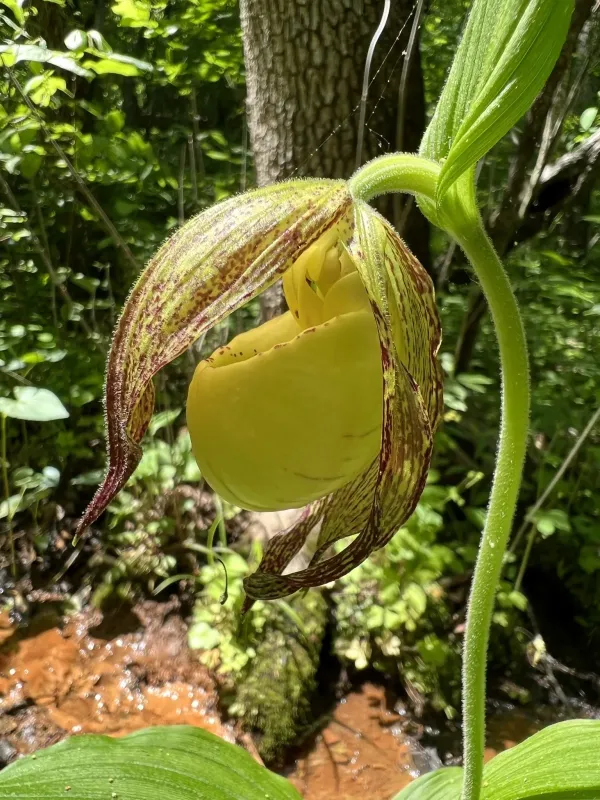
The Kentucky lady's slipper (Cypripedium kentuckiense) is a rare species of terrestrial orchid belonging to the Orchidaceae family. Native to the southeastern United States, it is considered one of the largest and most impressive species within its genus.
Botanically, this plant is defined by its massive creamy-white lip and striking brown-purple petals. It thrives as a woodland perennial, developing a subterranean rhizome system that relies heavily on specific mycorrhizal associations to absorb nutrients from the forest floor.
Cultivation success depends on providing a habitat that mimics its natural woodland environment. A site with dappled sunlight is essential; harsh afternoon sun must be avoided as it rapidly dehydrates the foliage and can lead to irreversible physiological stress.
The soil profile is critical for this species. It requires a loose, well-draining, and moisture-retentive medium. A mix incorporating leaf mold, fine bark, perlite, and a small amount of lime is generally recommended to maintain the preferred neutral to slightly alkaline pH level.
Water management is the most challenging aspect of its maintenance. The soil should remain consistently moist throughout the growing season but must never be waterlogged, as stagnant moisture promotes root decay, which is the primary cause of failure in domestic cultivation.
Main diseases and pests
Root rot is the most significant threat to the Kentucky lady's slipper, typically caused by poor drainage or excessive soil moisture. Once fungal pathogens penetrate the rhizome, recovery is difficult, making preventative drainage measures absolutely essential.
Gastropods, such as slugs and snails, pose a severe threat during the early spring as new shoots emerge. These pests can consume entire stalks overnight, and consistent monitoring or the use of physical barriers is required to protect the developing plant.
A lack of beneficial mycorrhizal fungi in the soil results in a gradual decline of the plant. Since the orchid cannot thrive without these symbionts, introducing native soil or specific fungal inoculants is often a necessary step for successful long-term establishment.
Aphids can infest the developing flower buds, leading to deformed blooms and stunted development. If infestation occurs, gentle washing or the application of organic soap-based sprays is advised, avoiding harsh chemicals that could damage the sensitive roots.
Over-fertilization represents a major risk, as excess salts quickly burn the delicate root system of this species. The plant is adapted to nutrient-poor forest soils and prefers organic matter to any synthetic chemical feeding programs.