
Cypripedium hybrids
Cypripedium hybrids
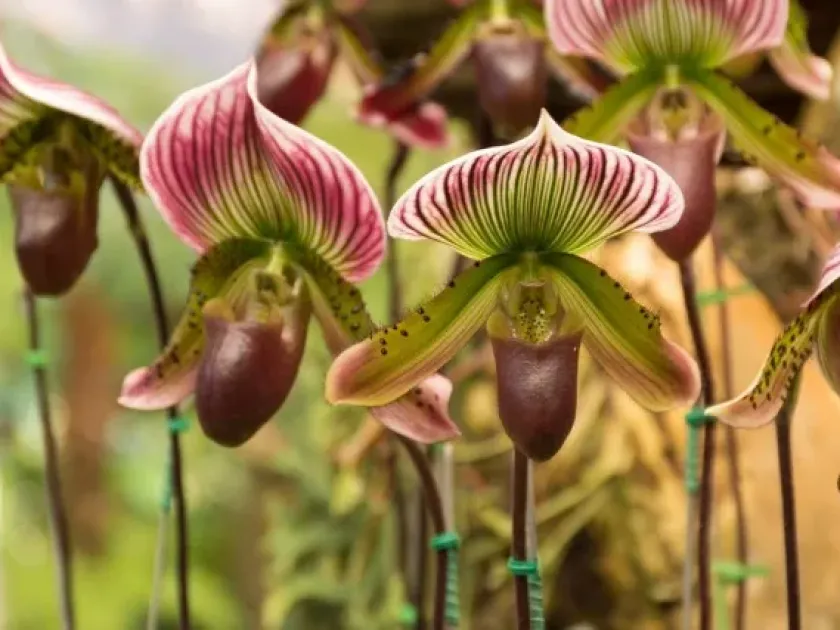
Description
Sowing dates
Planting Cypripedium hybrids is best performed during their dormancy period, typically in the autumn months. Late September through October provides an ideal window, allowing the root system to settle before the ground freezes solid in colder climates.
Spring planting is an alternative, though it requires greater care. It should be completed as soon as the soil is workable, before the new shoots emerge, to minimize the stress on the sensitive emerging buds which are prone to damage.
Correct placement of the rhizome is crucial for the long-term success of the plant. The roots should be spread out horizontally in the planting hole, ensuring that the dormant buds are pointed upwards and buried no deeper than 2 to 3 centimeters beneath the surface.
A specialized planting substrate is required to mimic natural conditions. A mixture of leaf compost, perlite, and coarse sand or fine grit is recommended to ensure the roots receive adequate moisture while maintaining perfect drainage to prevent rot.
After planting, the area should be gently firmed and mulched with organic material such as pine needles or leaves. This mulch layer acts as a temperature buffer, protecting the rhizome from extreme fluctuations during the winter months.
Growing requirements
Cypripedium hybrids belong to the Orchidaceae family and are specifically bred to be more vigorous than their wild counterparts. These plants are true perennials that, when provided with the correct environment, can thrive and expand in a garden setting for many years.
Site selection is key, with a preference for cool, semi-shaded locations. Avoid sites with intense direct sunlight, which can scorch the leaves; instead, plant them under the canopy of deciduous trees or on the northern side of a wall to provide soft, dappled light.
Soil chemistry should lean towards slightly acidic to neutral, with a pH between 6.0 and 7.0. The soil structure must be porous, allowing for constant gas exchange while retaining sufficient moisture to support the plant's delicate root system throughout the growing season.
Hydration management requires a delicate balance. The soil must remain consistently moist but never waterlogged. Providing a thick drainage layer of gravel or expanded clay at the base of the planting hole is essential to prevent moisture accumulation around the roots.
These orchids are generally winter-hardy and survive cold temperatures well. However, in regions lacking a consistent snow cover, an additional layer of mulch or brushwood is highly recommended to protect the crown and prevent deep frost heave.
Main diseases and pests
Fungal pathogens are the most common cause of decline in Cypripedium collections, usually triggered by poor drainage or overly humid conditions. Rotting rhizomes and stem blight are serious issues that require immediate intervention and removal of affected parts.
Gastropods, particularly slugs and snails, find young Cypripedium shoots highly palatable. Constant monitoring and the application of physical or chemical deterrents are necessary during the early spring to protect the emerging growth from being completely consumed.
Spider mites and aphids may infest the plants during hot and dry spells. These pests weaken the orchid by extracting vital sap, which significantly reduces the plant's vigor and may lead to poor flowering in the subsequent season if left untreated.
Viral infections, which manifest as leaf discoloration, mosaic patterns, or severe stunting, are unfortunately irreversible. Such plants serve as a reservoir for viruses and should be removed and destroyed to ensure the health of the surrounding garden collection.
- Regular inspection of leaf surfaces and stems.
- Ensuring proper spacing to facilitate air circulation.
- Keeping the area free from rotting organic debris.