
Formosan lady's slipper
Cypripedium formosanum
Description
Growing requirements
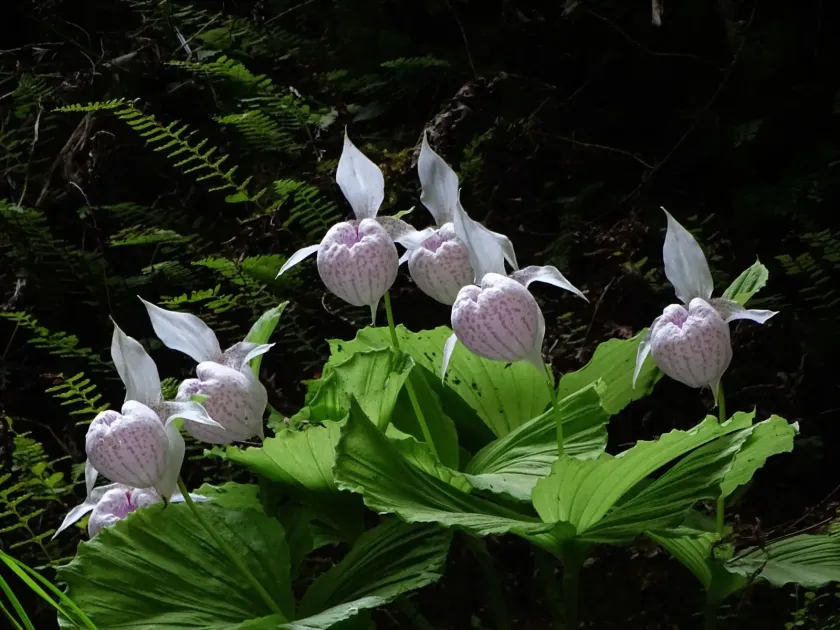
The Formosan lady's slipper (Cypripedium formosanum) is a perennial herbaceous plant belonging to the Orchidaceae family. It is native to the forests of Taiwan, where it thrives in moist, shaded environments, typically on slopes with well-draining substrate.
Botanically, it is distinguished by its unique fan-shaped leaves and a solitary, striking flower featuring an inflated, shoe-shaped labellum. The plant propagates through a creeping rhizome system that allows it to form small, elegant colonies over several years.
For successful cultivation, one must provide a substrate rich in organic matter, such as leaf mold, mixed with horticultural grit to ensure perfect drainage. A neutral to slightly acidic soil pH is essential for nutrient uptake and long-term health.
This species requires a sheltered location with dappled shade, as direct sunlight can easily scorch the delicate foliage. Ideally, it should be planted in a location that mimics the forest floor, providing cool, humid air and protection from harsh winds.
In terms of agricultural use, this plant is strictly for ornamental and collector purposes. Due to its slow propagation rate and specific habitat requirements, it remains a high-value item in specialized gardening markets and botanical collections.
Main diseases and pests
Root rot caused by stagnant water is the primary threat to this species. If the soil remains saturated for extended periods, the rhizomes become highly susceptible to fungal pathogens that can destroy the plant in a short time.
Slugs and snails are major pests, particularly during the emergence of new shoots in spring. Implementing physical barriers, such as copper tape or gravel mulch, is an effective way to protect the plant from these predators.
Aphids may infest the developing flower buds, leading to deformed blooms and general weakness. Regular monitoring is encouraged, and if an infestation is detected, insecticidal soap or specific biological controls should be applied.
Fungal leaf spots can occur if air circulation is insufficient in the planting site. Ensuring that the foliage can dry off after rain or irrigation is crucial for preventing the spread of spores and maintaining the plant's overall health.
Maintaining a clean growing environment by removing dead foliage each winter helps prevent the overwintering of pathogens. Properly managed plants are far more resilient to the challenges posed by pests and environmental stress.