
Crepidium metallicum
Crepidium metallicum
Description
Growing requirements
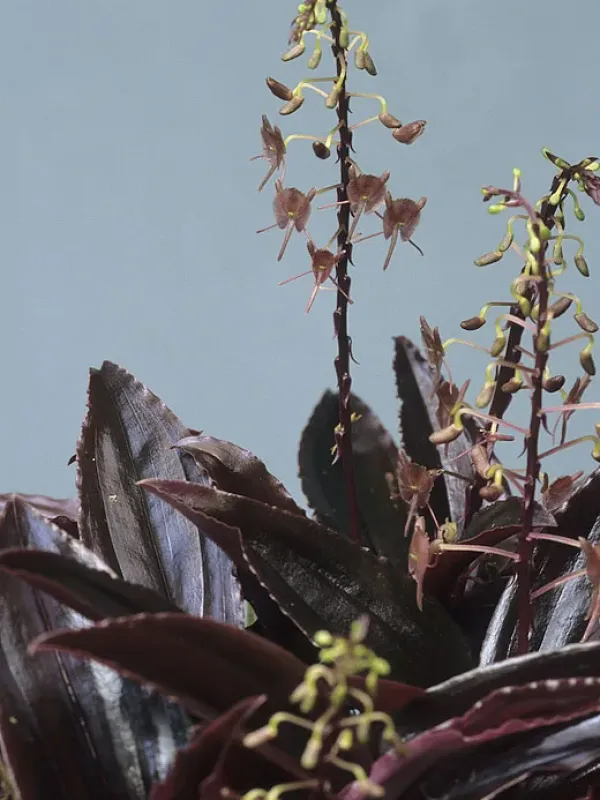
Crepidium metallicum is a striking perennial herbaceous plant belonging to the Orchidaceae family. In its natural habitat, this species is found in the humid tropical forests of Southeast Asia, where it thrives in shaded areas with a rich, organic forest floor.
Botanically, the plant is distinguished by its leaves, which feature a unique metallic sheen that gives the species its specific name. The stems are typically erect, bearing inflorescences of small yet elegant flowers, making it a highly valued specimen for exotic plant collections.
For successful cultivation in a greenhouse or indoor environment, the plant requires high humidity levels, ideally maintained between 60 and 70 percent. The temperature must remain stable, preferably between 20 and 25 degrees Celsius, to avoid the stress caused by sudden fluctuations.
The growing medium must be light, breathable, and slightly acidic, mimicking the forest leaf litter. A blend of conifer bark, charcoal, sphagnum moss, and perlite is optimal to ensure proper drainage and prevent the roots from becoming waterlogged.
Lighting should be bright but indirect, as direct sunlight can easily scorch the delicate foliage. The plant performs exceptionally well in partial shade, making it a great candidate for placement on eastern or western windowsills with filtered light.
Main diseases and pests
Fungal diseases caused by improper agricultural practices and excessive soil moisture pose the greatest threat to this orchid. Root rot is a common issue that occurs if drainage is insufficient, often leading to the rapid decay of the root system.
In closed indoor environments, the plant is susceptible to spider mites, which thrive in low-humidity conditions. Regular misting and wiping the leaves with a damp cloth are effective preventative measures against these common pests.
Mealybugs are another frequent threat, often hiding in the leaf axils and near the base of the stems. Their presence is usually signaled by a white, cotton-like substance, requiring immediate treatment with systemic insecticides to prevent infestation.
To prevent the spread of viral infections, it is crucial to use sterile tools when performing maintenance or propagation. Any damaged or necrotic plant tissue should be removed immediately, with cuts treated with crushed charcoal or a fungicide to protect the wound.
Yellowing of the leaves is a common indicator of improper watering or nutrient deficiency. Frequent monitoring of the substrate condition is essential, as the plant does not tolerate being left in a degraded medium for extended periods.