
Bromheadia finlaysoniana
Bromheadia finlaysoniana
Description
Growing requirements
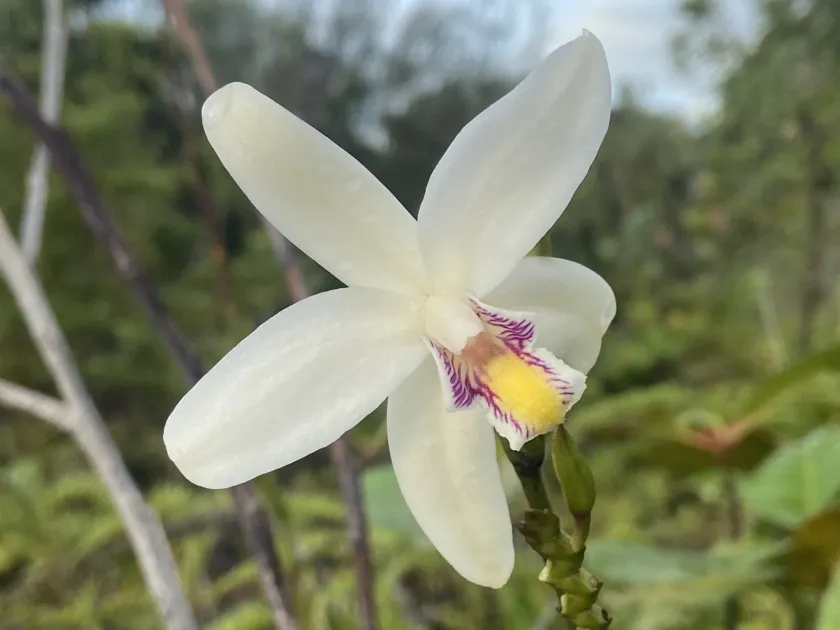
Bromheadia finlaysoniana is a robust species of orchid belonging to the Orchidaceae family, native to the tropical landscapes of Southeast Asia.
It thrives in humid environments, typically found in swampy forests and lowland areas where the climate remains consistently warm throughout the year.
For optimal growth, the species requires bright but filtered light, avoiding direct tropical sun which can easily damage its elongated foliage.
A well-draining, airy substrate consisting of coarse bark, perlite, and charcoal is essential to mimic its natural epiphytic habitat and prevent root decay.
Temperature management is crucial, as the plant prefers conditions between 20°C and 30°C with high atmospheric humidity to maintain its metabolic activities.
Yield
The primary economic and agricultural value of Bromheadia finlaysoniana lies in its role within the ornamental and exotic plant trade.
It is highly sought after by orchid enthusiasts and botanical gardens for its unique morphological structure and interesting flowering habits.
Although it is not a large-scale agricultural commodity, its cultivation contributes to the niche market of rare tropical botanical species.
Landscape designers in tropical climates use this orchid to enhance public gardens and ecological installations due to its architectural appearance.
Strategic breeding programs focusing on this species can enhance its durability and flower density, providing further commercial prospects for growers.
Main diseases and pests
The most common threat to this orchid is root rot, frequently caused by overwatering or the use of heavy, water-retaining soil substrates.
Scale insects and mealybugs are the primary pests that infest the leaves and stems, requiring systematic biological or chemical control measures.
Spider mites can also pose a significant problem during periods of low humidity, causing premature yellowing and dropping of the leaves.
Fungal infections often emerge in high-humidity greenhouses if the air circulation is inadequate, leading to leaf spotting and tissue necrosis.
To ensure plant health, regular monitoring and a preventative spray schedule are recommended to maintain the aesthetic and physical condition of the culture.