
Brassia
Brassia R. Br.
Description
Growing requirements
Brassia (Brassia R. Br.) is a genus of epiphytic orchids belonging to the Orchidaceae family. Native to tropical regions of Central and South America, these plants are well-known for their unique adaptation to high-humidity forest environments.
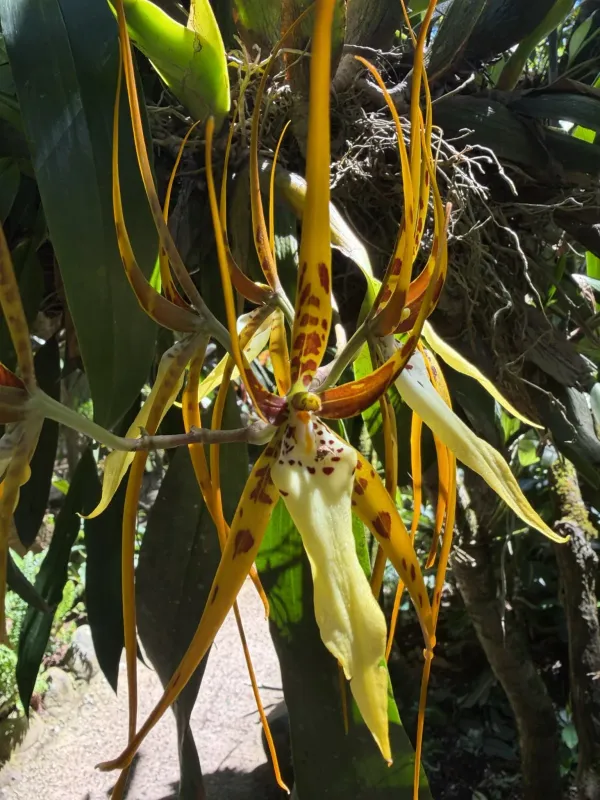
Botanically, Brassia is characterized by a sympodial growth habit, featuring distinct pseudobulbs that store water and nutrients. Its most notable feature is the spectacular inflorescence with elongated, spidery floral segments, earning it the common name "spider orchid".
These orchids thrive in bright, indirect sunlight. Exposure to harsh, direct midday sun is detrimental to the foliage and can lead to rapid dehydration of the pseudobulbs, therefore shading is necessary during peak hours.
The culture requires high atmospheric humidity, ideally between 60% and 80%. Maintaining this level is crucial for the development of healthy pseudobulbs and long-lasting flowers during the blooming period.
The growing medium must be highly porous and moisture-retentive but free-draining. A mix based on medium-grade pine bark, charcoal, and perlite is recommended to prevent root suffocation, which is a common risk in traditional soil mixtures.
Main diseases and pests
Spider mites are the most frequent pests, especially when the indoor environment lacks adequate humidity. They can quickly damage leaves, leading to chlorosis and potential loss of the plant.
Scale insects can also colonize the pseudobulbs and leaf bases. Manual removal followed by an application of appropriate horticultural oil or systemic insecticide is often required for effective control.
Fungal rots, including black rot and root rot, are primarily caused by overwatering and stagnant air. Ensuring proper airflow around the root zone is the best preventative measure against these infections.
Bacterial soft rot can occur if water remains trapped in the new leaf shoots. It is essential to water in the morning to allow any accumulated moisture to evaporate before cooler nighttime temperatures arrive.
Nutritional stress may appear if the substrate breaks down and becomes too acidic. Regular repotting every two years ensures a fresh, aerated environment, helping the plant maintain its natural resistance to pests and diseases.