
Bletilla
Bletilla Rchb. f.
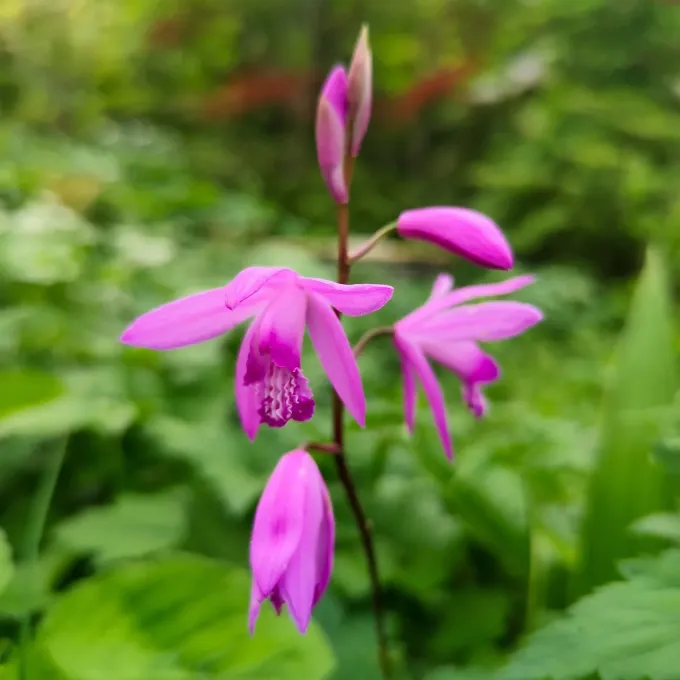
Description
Sowing dates
The propagation of Bletilla, a member of the Orchidaceae family, is most commonly achieved through the division of pseudobulbs. This procedure should be performed in early spring, just as the plant begins to emerge from its winter dormancy, ensuring the best results for root establishment.
When dividing the rhizomes, it is essential to ensure that each section contains at least two or three healthy pseudobulbs. This provides enough stored energy for the new division to establish its own root system and support subsequent foliage growth.
The planting depth should be approximately 5 to 7 centimeters. Placing the rhizomes too deep can delay emergence, while planting them too shallow may lead to drying out or damage from late spring frost, necessitating careful depth management.
While seed propagation is possible, it is rarely used outside of controlled laboratory environments due to the extreme difficulty of germinating orchid seeds, which lack endosperm and require specific mycorrhizal fungi to survive.
Post-planting care involves maintaining consistent soil moisture until active leaf growth is observed. Once the plant is established, it becomes more resilient, but maintaining a steady environment during the initial growth stage is crucial for high survival rates.
Growing requirements
Bletilla thrives in fertile, well-draining soils that are rich in organic matter. The ideal substrate should be light and aerated, often improved by the addition of materials such as perlite, bark, or well-rotted leaf mold to prevent water stagnation.
While the plant enjoys bright light, it is susceptible to leaf scorching if exposed to intense, direct midday sun. Partial shade, particularly during the hottest hours of the day, is recommended to maintain the health and color of the foliage.
Temperature requirements for active growth range from 18 to 25 degrees Celsius. During the winter, the plant enters a period of dormancy, requiring cool temperatures, ideally between 5 and 10 degrees Celsius, to ensure a successful rest period.
Moisture management is key to successful Bletilla cultivation. The soil should remain consistently moist but never waterlogged. Overwatering is the most frequent cause of failure, as it promotes root rot, which can quickly destroy the underground storage organs.
Fertilization should be applied sparingly during the growing season. Use a balanced, dilute liquid fertilizer specifically formulated for orchids to provide the necessary nutrients without causing toxic accumulation in the substrate.
Main diseases and pests
Fungal diseases, including root rot and grey mold (Botrytis), pose the most significant threat to Bletilla, particularly in cool, damp conditions with poor air circulation. Proper drainage and site selection are the primary defenses against these pathogens.
Slugs and snails are notorious for feeding on tender new shoots and leaves in the spring. Implementing physical barriers, such as copper tape or specialized bait, is often necessary to prevent significant damage to the developing foliage.
Aphids can infest the developing flower spikes, drawing sap and causing the buds to weaken or deform. Early detection and the application of mild insecticidal soaps are effective methods to manage these infestations before they spread.
Spider mites may become a problem during periods of hot, dry weather. They feed on the underside of leaves, causing discoloration and eventual decline. Increasing humidity around the plant is a common and effective preventative measure.
Preventative maintenance, including keeping the planting site free of debris and ensuring adequate spacing between plants, is essential. Regular monitoring allows for early intervention, ensuring that Bletilla remains healthy and productive throughout the season.