
Arachnis maingayi
Arachnis maingayi
Description
Growing requirements
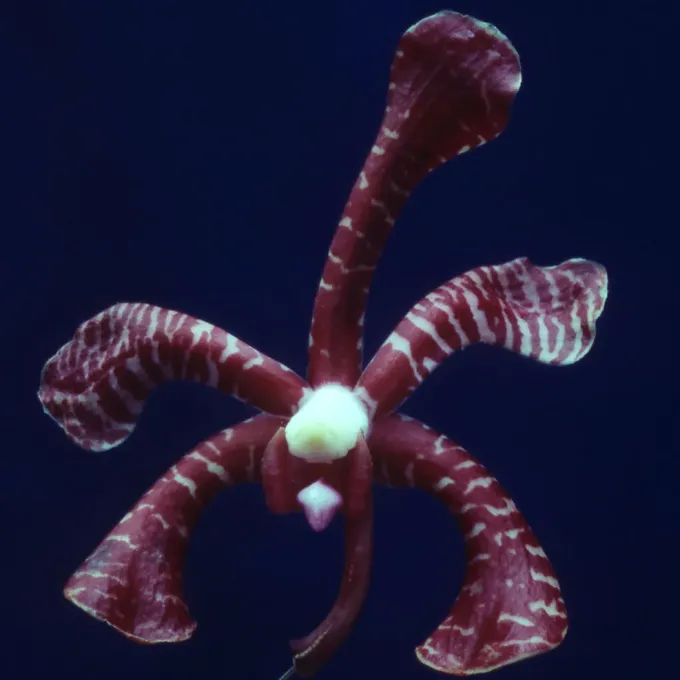
Arachnis maingayi is a distinct epiphytic orchid from the Orchidaceae family, commonly referred to as the spider orchid due to its unique petal morphology. This species originates from the tropical regions of Southeast Asia, thriving in high-humidity rainforest environments.
Successful cultivation requires a climate-controlled environment with temperatures ranging consistently between 22 and 30 degrees Celsius. Maintaining these thermal conditions is essential for the vegetative growth and consistent flowering of the plant.
The plant requires bright, filtered light to flourish and maintain its structural integrity. Direct sunlight should be avoided to prevent foliar scorching, especially during the peak sun hours, making light shading systems vital for greenhouse environments.
Soil requirements for this orchid are unique; the medium must be highly porous to ensure excellent drainage. A mixture consisting of large-grade fir bark, charcoal, and sphagnum moss provides the necessary aeration for the root system to prevent anaerobic conditions.
Humidity management is a critical component of the agrotechnology for Arachnis maingayi, with optimal levels sitting above 75 percent. Consistent misting or automated fogging systems are necessary to mimic the natural misty climate of their native habitat.
Main diseases and pests
Mealybugs and scale insects represent the most significant pest threats, frequently colonizing the leaf axils and stems. Integrated pest management, including regular inspection and the use of systemic insecticides, is required to keep populations under control.
Fungal infections, particularly root and stem rots, are common consequences of poor water drainage and stagnant air. Enhancing airflow through circulation fans is a critical cultural practice to mitigate these issues and promote plant longevity.
Bacterial spots, appearing as water-soaked lesions on the foliage, can spread rapidly if humidity is excessive without proper ventilation. Copper-based bactericides are often used as a control measure once the infected areas are pruned away.
Spider mites may become a localized problem if environmental conditions become too dry or hot. Monitoring leaf undersides for webbing or stippling is essential, and horticultural oils or specific miticides should be utilized upon identification.
Regular sanitation of pruning shears and tools is paramount to prevent the mechanical transmission of viruses and bacterial pathogens. A well-nourished plant with adequate spacing is less likely to succumb to these common environmental threats.