
Arachnis
Arachnis hybrids
Description
Growing requirements
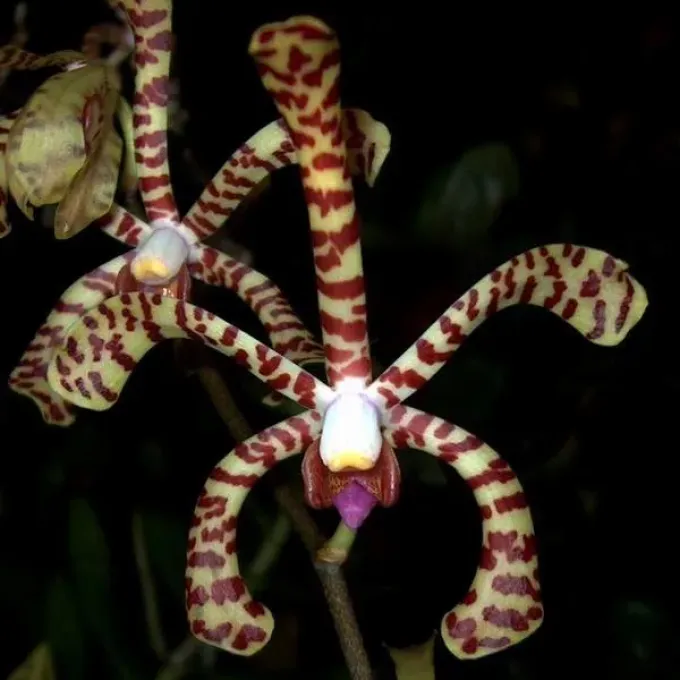
Arachnis hybrids are a group of epiphytic and lithophytic orchids belonging to the Orchidaceae family. Known commonly as spider orchids due to the unique shape of their petals, these plants are highly valued in both commercial horticulture and ornamental gardening.
Native to the tropical regions of Southeast Asia, these plants thrive in hot and humid environments. To successfully cultivate Arachnis, it is essential to replicate these conditions by maintaining high ambient temperatures and significant light exposure throughout the year.
The ideal temperature range for growth is between 22 and 32 degrees Celsius. These plants are heliophilic, requiring intense, indirect sunlight to trigger flower production. In greenhouse conditions, supplemental lighting may be necessary if natural light levels are insufficient.
Soil or substrate requirements are specific to epiphytes. The medium must be highly porous, typically consisting of pine bark, charcoal, and perlite to allow maximum air circulation for the roots. Poor drainage or compacted soil is fatal to this species.
Maintenance involves frequent misting and consistent watering to keep the relative humidity above 70%. Feeding with a balanced orchid fertilizer is recommended during the peak growth season, ensuring that the roots are flushed periodically to prevent salt buildup.
Main diseases and pests
Spider mites and mealybugs are the primary pests that attack Arachnis. These insects thrive in low-humidity environments, making proper greenhouse climate control the best preventive measure against infestations.
Root rot and stem rot are the most prevalent diseases, usually caused by overwatering or inadequate ventilation. Using sterile tools during propagation and ensuring excellent airflow significantly reduces the risk of fungal outbreaks.
Harvesting
Arachnis is primarily produced for the cut flower market, where its longevity and exotic appearance are highly prized. The stems are durable and can withstand extended transport times if handled with care.
Harvesting should occur once the blossoms are fully matured. Stems are cut at the base of the flower spike, and immediate hydration is necessary to ensure the blooms remain turgid and vibrant for end-users.
Post-harvest handling requires storing the stems in clean, cool water at temperatures around 10–12 degrees Celsius. Proper sanitation protocols are essential to prevent bacterial growth in the water, which could clog the stems and reduce vase life.