
Arachnis hookeriana
Arachnis hookeriana
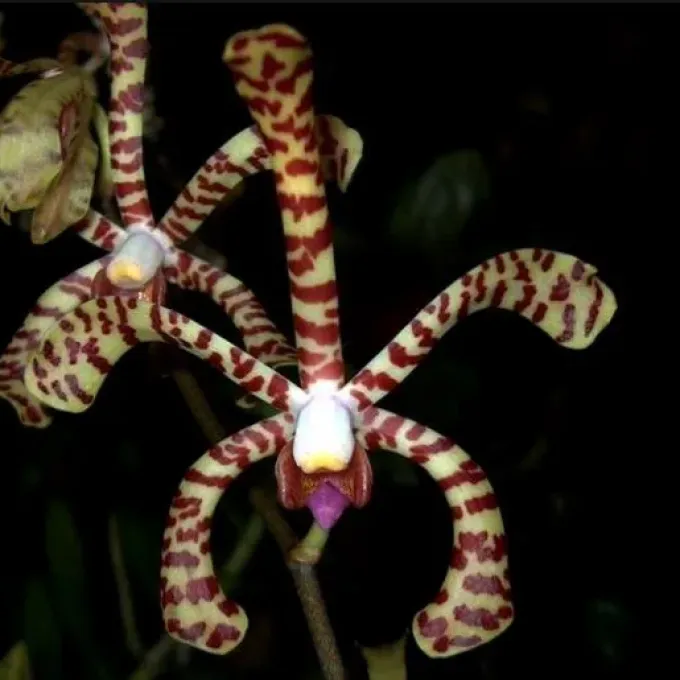
Description
Growing requirements
Arachnis hookeriana is a striking epiphytic orchid belonging to the Orchidaceae family. Native to the humid rainforests of Southeast Asia, this species is widely recognized for its spider-like flower morphology and robust growth habit in tropical environments.
For optimal growth, this plant requires high humidity levels consistently above 70%. It thrives in warm climates with temperatures ranging between 22°C and 30°C, and it is highly sensitive to cold drafts or significant nocturnal temperature drops.
Light intensity is critical for successful cultivation. Arachnis hookeriana requires bright, indirect light to trigger flowering cycles. In controlled agricultural settings, high-intensity discharge lamps or optimized greenhouse glazing are used to mimic its natural exposure.
The substrate must provide excellent aeration for the roots. A professional potting mix typically consists of coarse pine bark, charcoal, and perlite. This mixture facilitates rapid drainage, which is essential to prevent the accumulation of moisture around the roots.
Nutrient management involves the application of a dilute, balanced orchid fertilizer during the active growing season. Constant monitoring of electrical conductivity (EC) in the substrate ensures that salt buildup does not damage the delicate root system.
Main diseases and pests
Spider mites are the most prevalent pest for this crop, particularly during periods of low humidity. These pests feed on leaf tissue, leading to chlorosis and potential plant death if not treated with appropriate acaricides promptly.
Scale insects and mealybugs often cluster on the undersides of leaves and in leaf axils. Integrated Pest Management (IPM) practices, including the use of biological controls or systemic insecticides, are necessary to maintain plant health.
Fungal pathogens such as Fusarium and Botrytis pose a risk under conditions of poor air circulation and excessive moisture. Regular sanitation of the greenhouse environment is a mandatory requirement to suppress these disease-causing agents.
Bacterial soft rot can occur if water remains in the crowns of the plants for too long. Improving the irrigation techniques to target the substrate rather than the foliage helps in preventing such infections in high-density setups.
Viral infections are typically transmitted through mechanical handling with unsterilized tools. Implementing strict biosecurity protocols, including the sterilization of cutting equipment, is essential for maintaining a virus-free production cycle.