
Arachnis
Arachnis
Description
Growing requirements
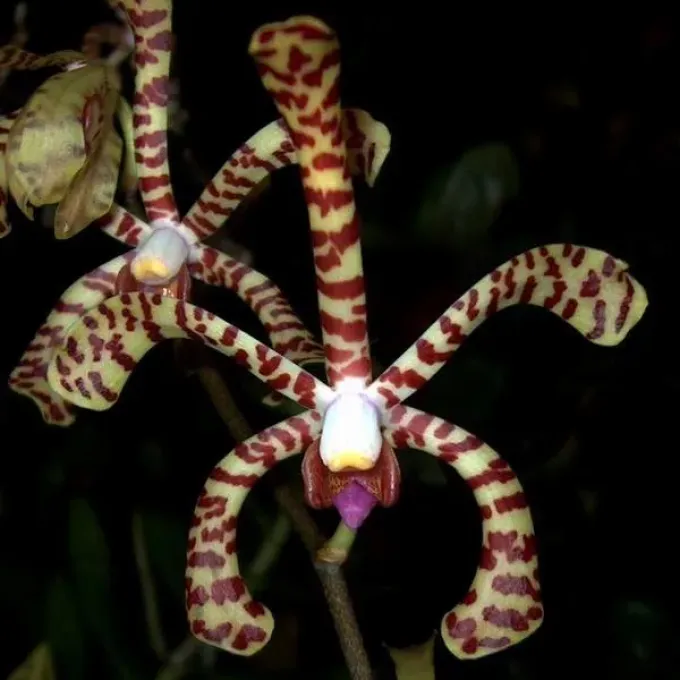
Arachnis is a genus of epiphytic orchids in the Orchidaceae family, characterized by robust stems and long, showy inflorescences. Originating from the tropical regions of Southeast Asia, these plants have evolved to thrive in environments with consistently high humidity and warm temperatures.
To cultivate Arachnis successfully, producers must maintain greenhouse temperatures between 22 and 30 degrees Celsius. The plants require intense, bright, but filtered sunlight, making proper shading systems essential for preventing foliage sunburn during peak hours.
The substrate must provide excellent aeration to ensure healthy root development. Standard industrial mixes include pine bark, charcoal, and perlite, which allow water to drain rapidly while maintaining enough moisture for the plant to thrive without root rot.
Agrotechnical care includes regular fertilization with balanced mineral nutrients during the active growth phase. Due to their tropical origin, Arachnis plants demand high relative humidity, typically maintained in professional setups via automated fogging systems.
The main commercial utility of Arachnis lies in the floral industry. Its exotic appearance and long vase life make it a highly valued cut flower, widely used in professional floristry for creating complex bouquets and luxury decorative displays.
Main diseases and pests
Fungal diseases are the primary threat to Arachnis in high-humidity environments. Issues such as Fusarium wilt and root rot can devastate a crop if not managed quickly through strict sanitation practices and the appropriate use of fungicides.
Pests such as spider mites and scale insects are common in greenhouse production. Integrated pest management (IPM) strategies, including regular inspections and the application of targeted insecticides, are vital for maintaining healthy, marketable crops.
Physiological disorders, often caused by improper climate control or thermal stress, can lead to stunted growth or bud blast. Consistent monitoring of environmental parameters is necessary to ensure the plants do not experience sudden temperature drops or lack of ventilation.
Quarantine protocols for new plant stock are essential to avoid the introduction of orchid viruses. Because these viruses have no cure, preventing their entry into the greenhouse is the only effective way to protect the integrity of the cultivation site.
Sanitation of tools and greenhouse surfaces remains a fundamental aspect of disease prevention. By maintaining a clean environment and ensuring optimal plant nutrition, growers can bolster the natural resistance of the plants against various biotic stressors.
Harvesting
Harvesting of Arachnis flower spikes occurs when approximately 70-80% of the flowers have opened on the stalk. This timing ensures the highest visual quality for the consumer while providing maximum longevity after the stem is cut.
Professional harvesters must use sterilized tools for every cut to avoid cross-contaminating plants with pathogens. Proper handling after the cut is essential to preserve the structural integrity of the brittle inflorescences.
Immediately after harvest, the spikes are placed in water or floral preservative solutions. Maintaining a temperature-controlled cold chain during storage and shipping, ideally between 12 and 15 degrees Celsius, is critical for reducing post-harvest losses.
The final product is graded based on stem length, number of open flowers, and overall spike vigor. Standardization of the harvest is key for growers looking to enter international floral auctions and meet the high expectations of professional florists.
Following the harvest, the mother plants enter a brief recovery phase where irrigation is reduced. This period is vital for the plant to store energy, ensuring robust development and high-quality blooming in the subsequent production cycle.