
Angraecum
Angraecum Bory
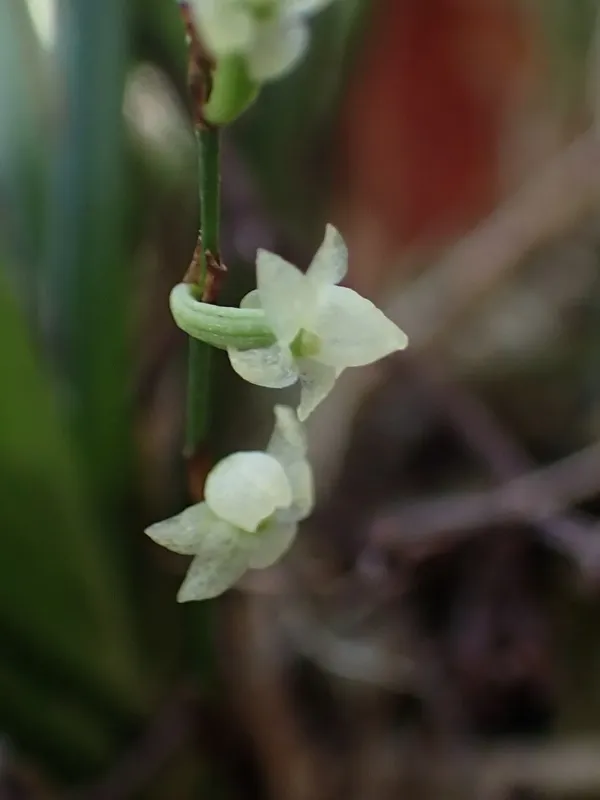
Description
Growing requirements
Angraecum (Angraecum Bory) is a genus of monopodial orchids belonging to the Orchidaceae family. These plants are primarily epiphytic by nature, native to tropical regions where they anchor themselves to the trunks and branches of forest trees.
Successful cultivation of Angraecum requires maintaining a high ambient humidity level, ideally ranging from 60% to 80%. These orchids thrive under bright, indirect light, as intense direct sunlight can cause significant damage to their succulent leaf structure.
The optimal temperature range is moderately warm, typically between +22°C and +26°C during the day. A crucial aspect of their agronomy is a consistent nocturnal temperature drop, which mimics their natural habitat and is essential for healthy growth and blooming.
For planting, it is necessary to use a very loose, airy substrate composed mainly of pine bark, charcoal, and sphagnum moss. Excellent aeration of the root system is mandatory to prevent the suffocation of roots and the development of anaerobic conditions.
Watering should be conducted by submerging the pot in soft, room-temperature water until the medium is fully saturated. Fertilizer applications must be strictly limited to the active growing season, ensuring that the salt concentration remains low to avoid root burn.
Main diseases and pests
The primary threats to Angraecum health arise from poor irrigation management and inadequate ventilation. Overwatering often leads to root rot and stem decay, which are facilitated by various soil-borne fungal pathogens that thrive in wet, stagnant environments.
Pests such as spider mites and scale insects are common in low-humidity conditions. If identified, these infestations should be treated promptly with specialized systemic insecticides or acaricides to prevent further physiological stress on the plant.
Mealybugs are another common threat, often hiding in the leaf axils where they are difficult to detect during standard inspections. Manual removal combined with biological control methods is recommended to keep the population under control without harming the plant.
Bacterial spot diseases often develop when high humidity is combined with poor airflow and cold temperatures. Affected leaves should be surgically removed with sterile tools, and the incisions must be sealed with antiseptic agents to prevent systemic spread.
Surface mold on the substrate is a clear indicator of poor air circulation and excessive moisture. To improve plant health, cultivators should introduce small fans to promote gentle airflow and ensure the substrate dries out sufficiently between watering sessions.