
Anacamptis pyramidalis
Anacamptis pyramidalis
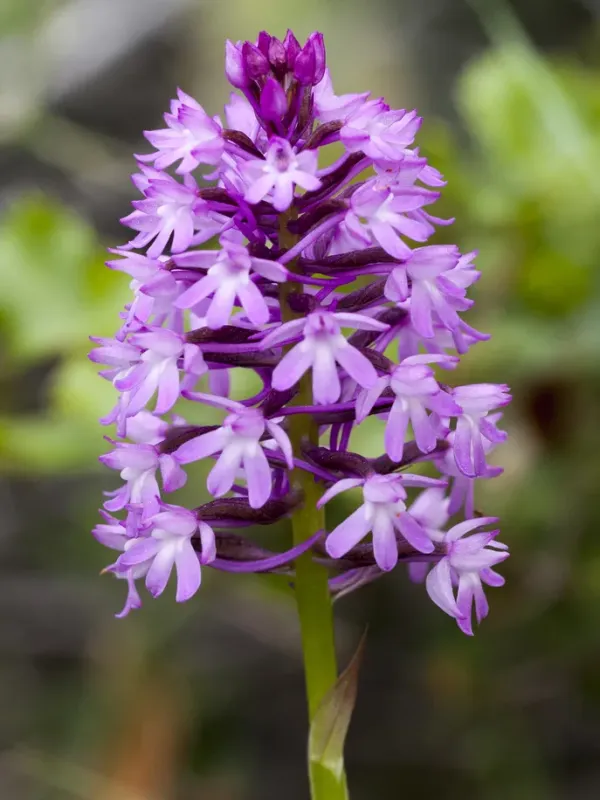
Description
Growing requirements
Anacamptis pyramidalis is a perennial orchid belonging to the Orchidaceae family, widely known for its distinct, dense, pyramid-shaped inflorescence.
Native to Europe and parts of the Mediterranean, this plant typically inhabits calcareous grasslands, scrublands, and open slopes with nutrient-poor soils.
The botanical structure consists of two tuberous roots, a basal rosette of leaves, and a tall, slender stem reaching up to 60 cm in height during the flowering stage.
Cultivation requires full sun or partial shade conditions and a well-draining substrate to prevent root rot, which is fatal for tuberous orchids.
Soil chemistry is critical for this species; it thrives in neutral to alkaline conditions and requires a substrate that mimics its natural chalky or limy habitat.
Main diseases and pests
Fungal pathogens represent the most significant threat to the plant, particularly during wet and cold spring periods when air circulation is poor.
Root rot caused by stagnant water is the primary cause of decline, as the tubers are highly susceptible to decay in waterlogged conditions.
Gastropods, including slugs and snails, represent the main biotic threats, as they can consume the entire leaf rosette in a single night.
Aphids are frequent visitors during the flowering season, causing damage to the delicate flower buds and reducing the overall reproductive success.
Leaf spot diseases can also occur, appearing as darkened patches on the foliage, typically spreading rapidly under conditions of high humidity.